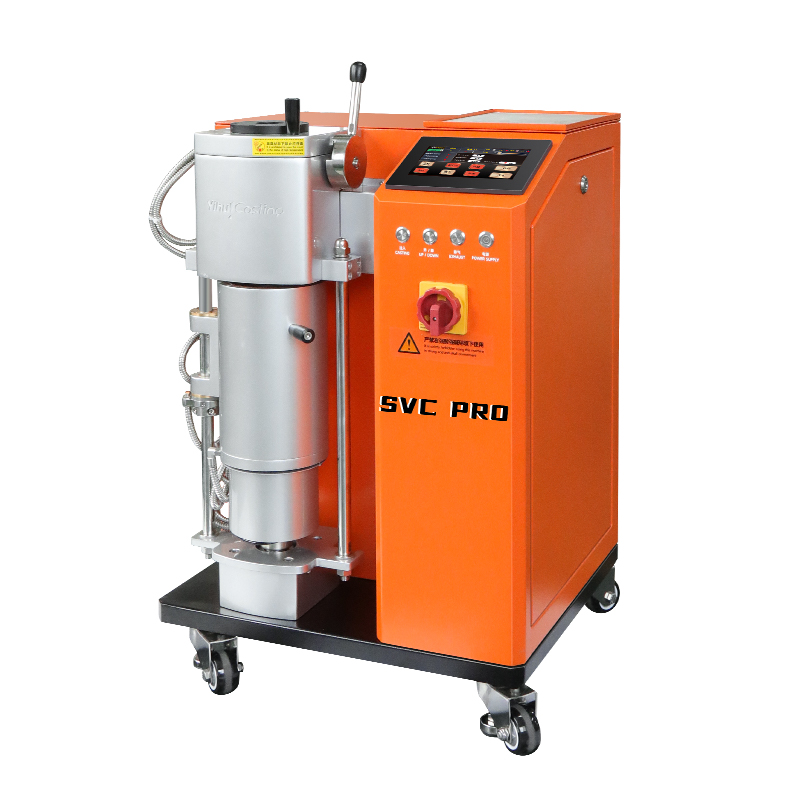
A vacuum pressure casting machine is one of the most critical investments in any jewelry production workshop. These machines combine vacuum-assist and pressure-casting technologies to deliver dense, porosity-free castings for gold, silver, platinum, and other precious metals. However, like any precision equipment, they require consistent and methodical maintenance to perform at their best. Neglecting routine upkeep leads to casting defects, unplanned downtime, and costly repairs that far exceed the time and effort spent on preventive care.
This article provides a comprehensive routine maintenance checklist tailored for jewelry workshop professionals who operate vacuum pressure casting machines. By following these procedures on a daily, weekly, and monthly basis, you can extend equipment lifespan, maintain casting quality, and keep your production line running smoothly.
Daily maintenance focuses on cleaning and inspecting the parts of your casting machine that endure the most wear and exposure during every casting cycle. These tasks take only a few minutes but form the foundation of long-term reliability.
1. Clean the Casting Chamber and Flask Adapter
After each production session, remove residual metal splatter, investment dust, and graphite debris from the casting chamber. Use a soft brass brush or a non-abrasive scraper to avoid damaging the chamber walls. Wipe the flask adapter seal surfaces with a lint-free cloth dampened with isopropyl alcohol. Any debris left on sealing surfaces compromises vacuum integrity and leads to porosity in your castings.
2. Inspect Vacuum Pump Oil Level and Condition
Check the vacuum pump oil reservoir sight glass. The oil should be at the indicated level and appear clear or light amber. Dark, milky, or gritty oil indicates contamination from moisture or metal particles and must be replaced immediately. Running a vacuum pump with degraded oil reduces vacuum performance and accelerates internal pump wear.
3. Examine O-Rings and Gaskets
Visually inspect all visible O-rings and gaskets—particularly those on the casting chamber lid, flask adapter, and vacuum hose connections. Look for cracks, flattening, hardening, or surface wear. Replace any O-ring that shows signs of deterioration rather than waiting for it to fail during a casting run. A single compromised seal can cause vacuum leaks that ruin an entire flask of castings.
4. Clear the Pressure Relief Valve
Confirm that the pressure relief valve operates freely and is not obstructed by dust or metal residue. A stuck relief valve poses a safety hazard and can prevent proper pressure regulation during casting cycles.
Weekly tasks go beyond surface cleaning to address components that accumulate wear or contamination over multiple production days.
1. Change Vacuum Pump Oil
Depending on your production volume, most manufacturers recommend changing vacuum pump oil every 40 to 80 operating hours—typically once per week for a busy workshop. Drain the old oil completely, wipe the reservoir interior, and refill with the manufacturer's recommended oil grade. Never substitute with generic oils, as incorrect viscosity or additive packages can damage pump internals.
2. Clean and Test the Vacuum Solenoid Valves
Solenoid valves control the vacuum and pressure cycles in your vacuum pressure casting machine. Remove each solenoid valve, clean the valve body and seat with compressed air and a lint-free cloth, and check for stuck or sluggish operation. A malfunctioning solenoid can cause incomplete vacuum draw or premature pressure release, both of which produce defective castings.
3. Inspect the Heating Elements and Thermocouples
Examine the crucible heating coil or induction coil for discoloration, cracking, or deformation. Check thermocouple connections for corrosion or looseness. Erratic temperature readings often stem from degraded thermocouples and can lead to under-melted or overheated metal—both of which waste material and produce poor castings.
4. Lubricate Moving Parts
Apply the manufacturer's recommended lubricant to the casting chamber lid hinge, flask clamp mechanisms, and any sliding or rotating components. Avoid over-lubrication, which can attract dust and debris into sealing surfaces.
5. Verify Electrical Connections
Inspect terminal blocks, relay contacts, and cable harnesses for loose connections, corrosion, or heat discoloration. Tighten any loose terminals and replace cables with damaged insulation. Electrical faults in a jewelry casting equipment system can cause unpredictable shutdowns, inconsistent heating, or safety hazards.
Monthly and quarterly maintenance addresses deeper system integrity, calibration accuracy, and long-term component health.
1. Perform a Full Vacuum Leak Test
Using a vacuum gauge, run the machine through a vacuum-only cycle without a flask in place. Record the vacuum level reached and the rate of decay over a five-minute hold period. Compare these readings against the manufacturer's specifications. A vacuum decay rate exceeding the specification indicates a leak somewhere in the system—often in O-rings, hose connections, or chamber seals. Systematically isolate and repair leaks to restore full vacuum performance.
2. Calibrate Temperature Controls
Use a calibrated external pyrometer or thermocouple reference to verify that the machine's displayed temperature matches the actual crucible temperature. Temperature offsets of even 10 to 15 degrees can affect melt quality for alloys with narrow melting ranges. If the display shows a deviation, recalibrate the thermocouple or adjust the controller offset according to the manufacturer's procedure.
3. Replace Wear-Part Kits
Many manufacturers offer scheduled wear-part replacement kits that include O-rings, gaskets, seals, and filter elements designed to be replaced at specified intervals. Follow these schedules even if the parts appear functional—preventive replacement avoids unexpected failures during production runs.
4. Deep Clean the Crucible and Pour Channel
Remove the crucible and inspect its interior for oxide buildup, residual slag, or cracks. Clean the pour channel and spout area thoroughly. A partially obstructed pour channel restricts metal flow and can cause incomplete fill in castings.
Once a year, schedule a comprehensive overhaul with a qualified service technician. This should include:
Complete disassembly, cleaning, and reassembly of the vacuum pump
Replacement of all pressure and vacuum hoses
Full electrical system inspection and testing, including earth continuity and insulation resistance
Controller firmware update if applicable
Recalibration of all temperature, vacuum, and pressure sensors
Load testing under maximum operating conditions
An annual professional service ensures that your Yihui Casting machine operates within factory specifications and identifies developing problems before they become expensive failures.
Creating a sustainable maintenance culture requires more than knowing what to do—it demands consistent execution. Here are practical strategies for workshop managers:
Assign Ownership
Designate specific team members as responsible for each maintenance interval. Daily tasks belong to the operator, weekly tasks to a senior technician, and monthly/annual tasks to a service coordinator. Clear ownership prevents tasks from being skipped or duplicated.
Document Everything
Maintain a logbook or digital record for each machine. Record every maintenance action, vacuum test result, oil change date, and component replacement. This history enables trend analysis—for example, tracking vacuum decay rates over months reveals whether seals are deteriorating gradually, allowing proactive replacement before a failure.
Stock Critical Spare Parts
Keep an inventory of O-rings, vacuum pump oil, thermocouples, solenoid valves, and fuse elements on hand. Waiting for a replacement part during a production shutdown costs far more than the part itself. Your machine manufacturer can provide a recommended spare parts list tailored to your model.
Train All Operators
Every person who uses the vacuum pressure casting machine should understand the daily maintenance checklist and be able to recognize warning signs—unusual sounds, vacuum gauge anomalies, or temperature display irregularities. Early detection by trained operators is the most cost-effective maintenance strategy available.
A disciplined maintenance routine for your vacuum pressure casting machine is not optional—it is a prerequisite for consistent casting quality, safe operation, and profitable production. The checklist outlined in this article covers every critical maintenance interval from daily cleaning to annual overhaul, giving you a structured framework that can be adapted to your specific machine model and production schedule.
By investing a small fraction of your operating time in preventive maintenance, you avoid the far greater costs of emergency repairs, production stoppages, and defective castings. Whether you are running a single machine or managing a multi-unit production floor, this checklist will help you keep your equipment performing at factory specifications year after year.
For professional-grade vacuum pressure casting machines built for durability and ease of maintenance, explore the full range of solutions from Yihui Casting. Our equipment is designed with accessible service points, clear maintenance documentation, and readily available spare parts to keep your workshop running at peak efficiency.
 online service
Scan to wechat :