Every jewelry manufacturing business begins with a vision for growth. A startup workshop might begin producing a few dozen pieces per day, but the goal is typically to scale to hundreds or thousands of pieces daily as the business establishes its market position. The equipment infrastructure put in place on day one either supports this growth trajectory or constrains it. A well-designed one-stop solution for jewelry casting should accommodate expansion from startup volumes to high-volume production without requiring wholesale equipment replacement, protecting the initial investment while scaling capacity to meet rising demand.
Scaling successfully requires understanding where bottlenecks will emerge, planning capacity expansions in the right sequence, and making strategic decisions about automation and process upgrades at the appropriate growth stages. This article provides a roadmap for scaling a jewelry casting operation, covering equipment selection for the startup phase, bottleneck identification during growth, and the automation strategies that enable true high-volume production.
The most common mistake startup workshops make is purchasing equipment that is either too small—creating immediate bottlenecks that limit growth—or too large, tying up capital in capacity that sits idle. The key is selecting equipment that is appropriately sized for initial production volumes but designed to integrate with additional capacity as demand grows.
For a startup jewelry workshop expecting to produce 50 to 200 pieces per day, recommended starting equipment includes:
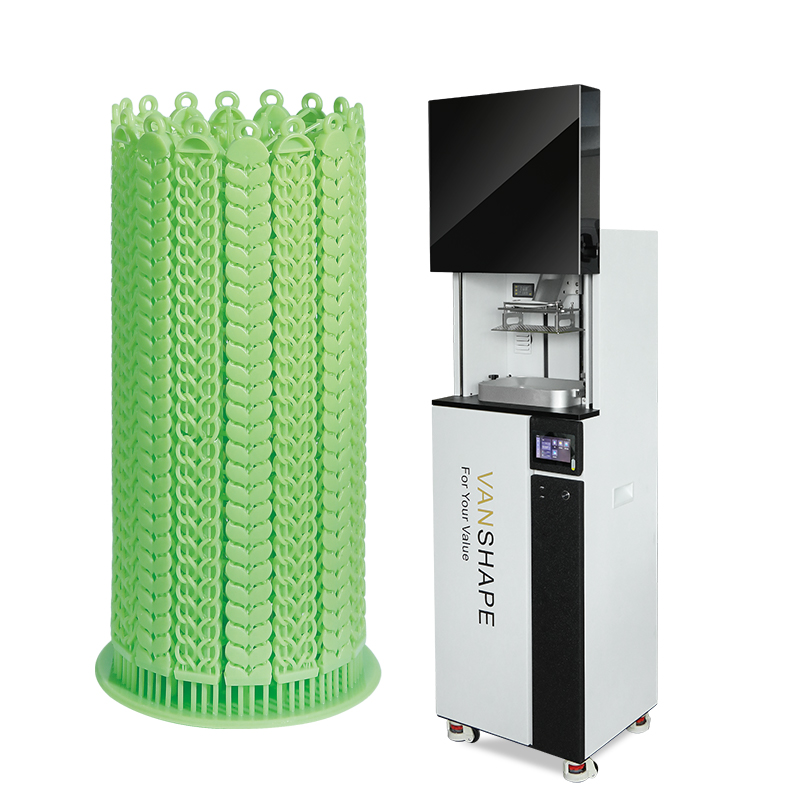
A compact 3D jewelry printer with a build volume of approximately 100 x 60 x 100 mm, capable of producing 20 to 40 patterns per build cycle
A vacuum wax injector with a 2 kg wax capacity, sufficient for 100 to 200 injections per day
An induction melting furnace with 1 to 2 kg gold capacity, providing enough molten metal for small-batch casting
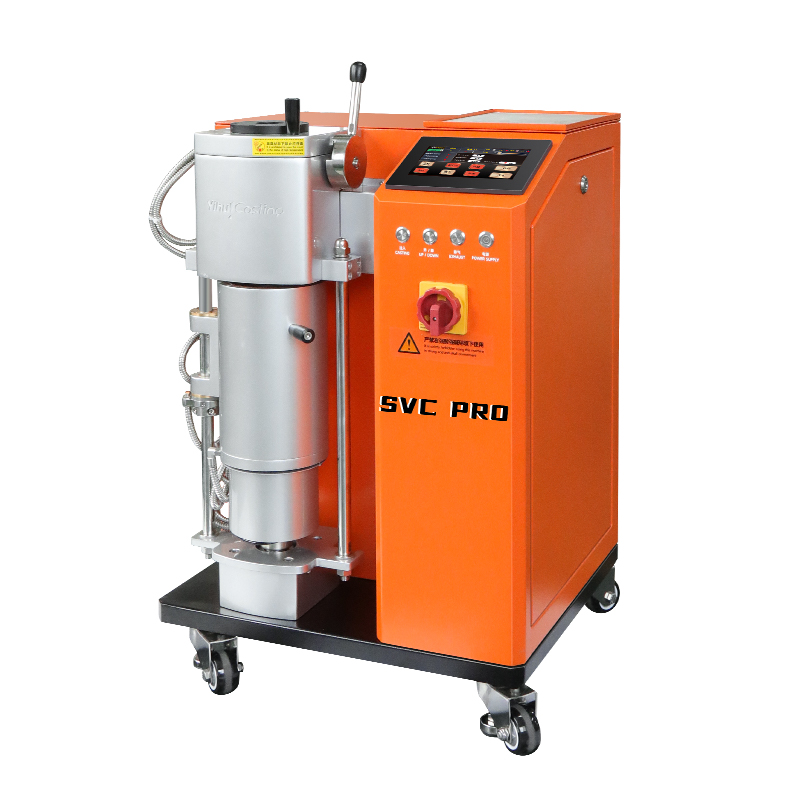
A vacuum pressure casting machine accepting 3 to 4 inch flasks, suitable for jewelry-sized trees
A basic laser welding station for assembly and repair
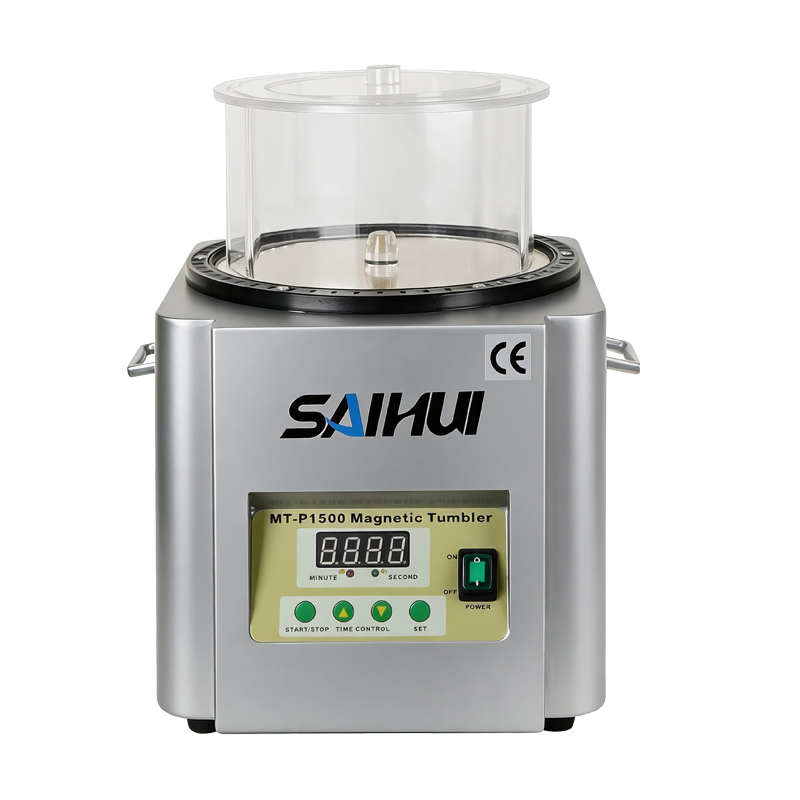
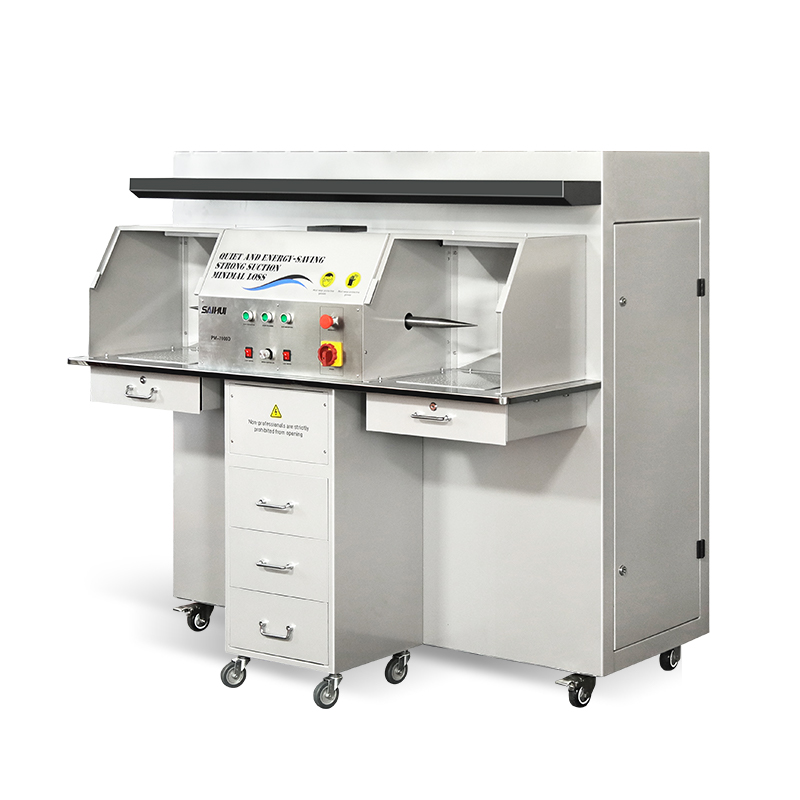
A combination magnetic polisher and buffing station for finishing
The critical consideration is not just current capacity but upgrade compatibility. When purchasing from Yihui Casting, the initial equipment should be part of a product family that includes larger-capacity models using the same control systems, consumables, and tooling. This compatibility ensures that adding a second casting machine or upgrading to a larger furnace does not require retraining operators or maintaining duplicate spare parts inventories.
Physical workshop layout should anticipate growth from the outset. While the startup phase may use only 50% of available floor space, the layout should designate areas for future equipment additions. Utility infrastructure—electrical capacity, water cooling lines, ventilation, and gas supply—should be sized for the fully expanded production line, not just the initial equipment. Retrofitting utilities is significantly more expensive and disruptive than installing them during initial construction.
Plan the workflow path to accommodate additional machines at each stage. A linear layout where equipment is arranged in process sequence—design, printing, mold making, wax injection, melting, casting, finishing—allows new machines to be added in parallel at any stage without disrupting the existing flow.
As production volume increases, bottlenecks emerge in a predictable sequence. Understanding this progression allows workshop managers to anticipate capacity constraints and plan expansions proactively rather than reactively.
Phase 1: 3D Printing Capacity — The first bottleneck typically appears at the pattern production stage. A single 3D printer can produce only one build per 4 to 8 hours, and as order volumes increase, the printer becomes a queue point. The solution is adding a second printer or upgrading to a model with larger build volume and faster cycle times.
Phase 2: Wax Injection — As pattern demand grows, the vacuum wax injector may struggle to keep pace, particularly if multiple silicone molds are in rotation. Adding a second injector or upgrading to a dual-station model resolves this constraint.
Phase 3: Casting Throughput — A single casting machine can typically complete 6 to 12 casting cycles per day, depending on alloy type and flask size. Once daily production demand exceeds this capacity, a second casting machine becomes necessary—ideally the same model or a higher-capacity version from the same product family.
Phase 4: Finishing and Polishing — The finishing stage is frequently the last bottleneck to appear, as it is the most labor-intensive portion of the process. Scaling finishing capacity typically requires both additional equipment and additional operators, making it a more complex expansion than adding upstream machines.
Identifying bottlenecks should not be a matter of guesswork. Implement a simple production tracking system that records daily output at each stage: patterns printed, wax models injected, castings completed, and pieces finished. When the ratio between stages begins to skew—with work-in-progress accumulating before one stage while downstream machines sit idle—the bottleneck is clearly identified.
This data-driven approach prevents the common error of expanding the wrong stage. Many workshops invest in a larger casting machine only to discover that the real constraint was at the wax injection or finishing stage, leaving the new casting machine underutilized.
Once a bottleneck is identified, the most straightforward scaling strategy is adding a parallel machine at the constrained stage. If one vacuum pressure casting machine can handle 10 cycles per day and demand requires 18 cycles, adding a second identical machine increases capacity to 20 cycles with minimal operational disruption. Operators are already trained on the machine model, spare parts are shared, and the process parameters are proven.
Parallel expansion works best when the bottleneck is at a discrete-process stage like casting or wax injection, where each cycle is independent and adding machines linearly increases capacity. The approach is less effective for continuous-process stages like polishing, where throughput depends on operator skill and batch optimization as much as on equipment count.
For some stages, upgrading to a larger machine is more efficient than adding parallel units. A 1 kg melting furnace might be replaced with a 3 kg model rather than adding a second small furnace, reducing floor space requirements and simplifying alloy management. Similarly, a small 3D printer might be replaced with a larger-build-volume model rather than operating two small printers in parallel.
The decision between parallel addition and sequential upgrade depends on several factors: available floor space, capital cost comparison, operator availability, and the specific process characteristics of each stage. A one-stop equipment supplier who understands the full production line can provide guidance on which strategy is optimal for each growth stage.
At production volumes exceeding 500 to 1,000 pieces per day, manual operation of individual machines becomes a limiting factor. Automation upgrades that can transform throughput include:
Automated wax injection systems: Robotic or rotary-table wax injectors that operate continuously with minimal operator intervention, increasing daily output from 200 to 500+ injections per machine
Multi-flask casting systems: Casting machines that handle multiple flasks per cycle or sequential flask loading, increasing daily casting cycles from 10 to 25+ per machine
Continuous melting furnaces: Furnaces with automated feed and pour systems that maintain a continuous supply of molten metal, eliminating the batch melting bottleneck
Automated polishing lines: Multi-stage tumbling and polishing systems with programmable media changes that operate unattended for extended periods
These automation upgrades represent significant investments, but they deliver step-change improvements in throughput rather than the incremental gains of parallel machine addition. The key to successful automation is ensuring that the automated systems integrate with the existing equipment base—another advantage of sourcing from a single supplier whose product line includes both manual and automated options.
High-volume production requires digital process management to maintain quality and traceability. As the operation scales, implement:
Production scheduling software that optimizes machine utilization across all stages
Recipe management systems that store and deploy casting parameters for each alloy and product type
Quality tracking databases that link casting parameters to defect rates, enabling continuous process improvement
Inventory management systems that track work-in-progress and finished goods across the production line
These digital systems transform a collection of individual machines into a true manufacturing operation, providing the visibility and control needed to manage high-volume production efficiently. A jewelry casting equipment suite designed for scalability should support these digital capabilities, either natively or through integration with third-party manufacturing software.
Scaling a jewelry casting operation from startup to high-volume production is not simply a matter of buying more machines. It requires strategic equipment selection at the outset, proactive bottleneck identification during growth, and well-timed automation upgrades as volumes justify the investment. A one-stop solution for jewelry casting provides the foundation for this growth by ensuring equipment compatibility across capacity tiers, simplifying operator training as new machines are added, and providing a clear upgrade path from manual to automated production.
Workshop owners who plan for scale from day one—selecting equipment that is part of a scalable product family, designing workshop layouts for expansion, and implementing production tracking systems—will navigate growth phases far more smoothly than those who expand reactively. The result is a production operation that grows efficiently, maintains quality at every volume level, and protects the initial equipment investment throughout the scaling journey.
Planning to scale your jewelry production operation? Visit Yihui Casting to explore scalable equipment solutions designed to grow with your business from startup to high-volume manufacturing.
 online service
Scan to wechat :