Understanding which surface defects a jewelry polishing machine can resolve and which require upstream process correction is critical for jewelry manufacturers managing both quality and production efficiency. Polishing machines are powerful surface modification tools, but they operate within specific physical and mechanical limitations. Expecting a polishing machine to fix defects rooted in casting, mold-making, or alloy composition errors leads to wasted cycle time, excessive media consumption, persistent quality failures, and ultimately customer-returned products. Conversely, under-utilizing polishing machines for defects they can effectively resolve leads to unnecessary manual hand-polishing labor. This article provides a systematic classification of common jewelry surface defects, clearly distinguishing those within polishing machine capability from those that demand upstream intervention in the casting and mold-making stages.
Polishing machines excel at resolving surface-level defects where the problem is limited to the outermost material layer—conditions where mechanical abrasion, burnishing, or chemical compound action can modify the surface to acceptable quality without structural implications.
Discoloration on jewelry surfaces—whether caused by metal overheating during casting, atmospheric oxidation, sulfur contamination producing dark sulfide films, or carbon residue from incomplete wax burnout—is a surface-layer phenomenon that polishing machines can address effectively. Wet vibratory finishing with appropriate compound chemistry (tarnish-active compounds for silver sulfide, mild acid compounds for oxide layers on gold) dissolves and removes discoloration films while the media mechanically polishes the underlying clean metal surface. The chemical contribution of the compound is essential here: mechanical polishing alone can burnish over a discoloration film (creating a thin, polished oxide layer that appears acceptable initially but reveals the underlying discoloration over time as the surface wears). Proper compound chemistry removes the film entirely before burnishing the clean surface. Surface discoloration is one of the most common and easily resolved defects in jewelry finishing—any functional jewelry polishing machine with appropriate compound selection can address it reliably.
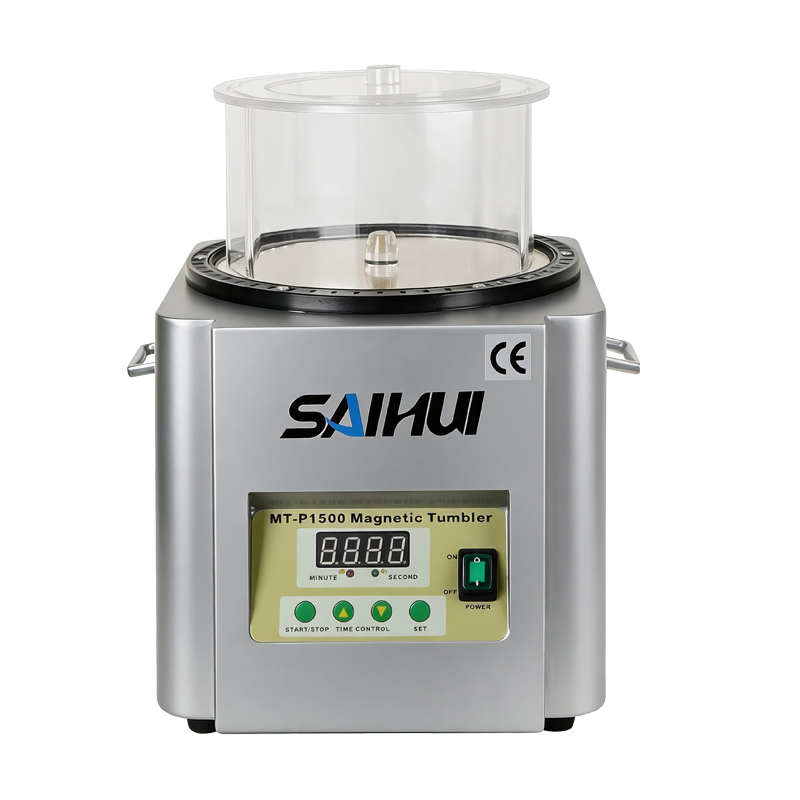
Flash and fins—thin metal extensions formed when molten metal seeps into mold cracks, misaligned mold seams, or gaps in investment shell integrity—are surface protrusions that polishing machines remove efficiently. The thin, fragile nature of flash means it breaks off under moderate media contact forces, requiring only standard deburring media and cycle times. Vibratory finishing and magnetic polishing both process flash effectively—vibratory machines break flash through media impact, while magnetic polishing's micro-pins shear thin protrusions with minimal force. Barrel tumbling also removes flash but risks creating additional surface indentations from part-impact collisions during the aggressive tumbling action. For jewelry pieces with flash in detailed areas (prong gaps, channel interiors), magnetic polishing provides the best access and removal capability.
Investment casting leaves surface roughness patterns—fine granular textures, investment powder adhesion, and surface irregularities from the investment shell interface. These surface-level texture defects are within polishing machine capability: vibratory finishing with ceramic or plastic media (depending on metal hardness) smooths investment-related roughness to acceptable surface quality within standard cycle times. The mechanical abrasion progressively reduces surface roughness from as-cast levels (Ra 3–6 µm) to finished levels (Ra 0.2–0.8 µm) through controlled material removal. The key parameter for investment roughness removal is media selection—plastic media for soft metals to prevent over-processing, ceramic media for hard metals to ensure sufficient cutting power. Surface roughness from investment residue is the primary application that most jewelry polishing machines are designed to address, and results are consistently achievable with proper process parameters.
Light burrs and sharp edges from casting, machining, or stone-setting operations respond well to polishing machine processing. Vibratory finishing naturally rounds sharp edges through media contact—the degree of edge rounding is controlled by cycle time, media aggressiveness, and machine speed. For jewelry where slight edge softening is desirable (inner ring edges for comfort wear, bracelet clasp edges for safety), polishing machines produce controlled edge modification that meets both functional and aesthetic requirements. However, the distinction between "mild" and "significant" burrs is critical: mild burrs (material protrusions less than 0.1 mm) are within polishing machine capability; significant burrs (0.5 mm or more) may require dedicated deburring processes or manual intervention before polishing.
Water film defects—caused by the hydrophobic wax surface preventing uniform investment slurry adhesion—produce fine surface ridges or veins on cast jewelry. These shallow surface texture irregularities (typically 0.01–0.05 mm depth) are within polishing machine capability: light vibratory finishing or magnetic polishing smooths the ridges to an even surface. The shallow depth of water film defects means they require minimal material removal to resolve, and cycle times for correction are short (15–30 minutes in vibratory finishing). Prevention through surfactant addition to investment slurry is preferred, but when water film defects occur despite preventive measures, polishing machines provide effective correction.
Structural, internal, and dimensional defects that extend beyond the surface layer cannot be resolved by polishing machines. Attempting to process these defects through polishing wastes time, media, and compound without achieving acceptable results—and in some cases, polishing exacerbates the underlying problem.
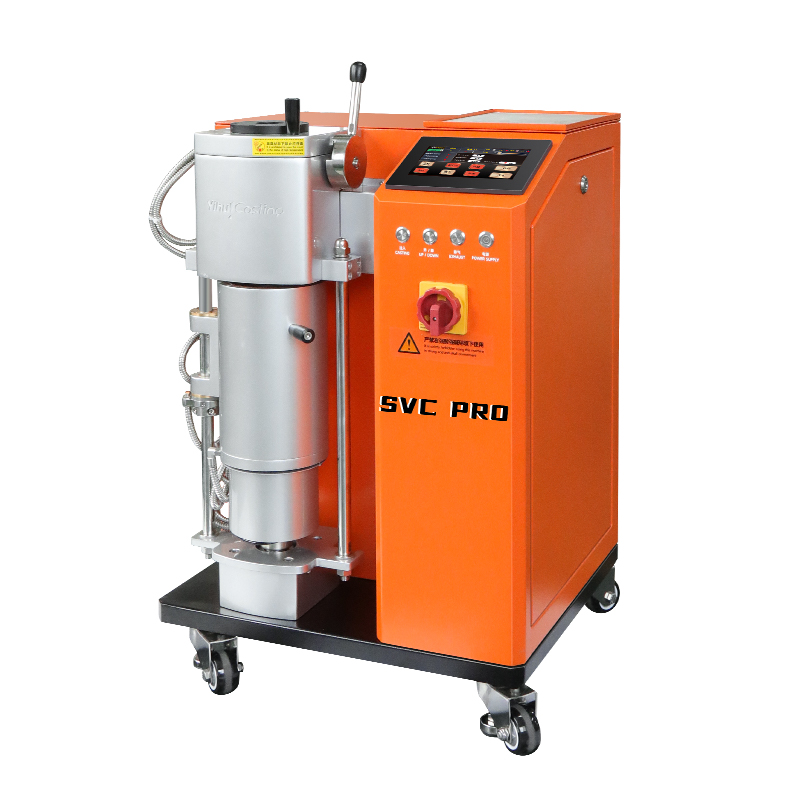
Porosity—internal or surface-visible voids in the metal structure—is the most significant defect category that polishing machines cannot resolve. Gas porosity (from trapped oxygen or hydrogen during solidification), shrinkage porosity (from insufficient metal feed during cooling contraction), and investment porosity (from air bubbles in the investment slurry) all create voids within the metal that extend below the surface. Polishing may temporarily smooth surface-visible porosity openings by burnishing surrounding metal over the void openings, creating a surface that appears acceptable immediately after polishing. However, the underlying voids remain, and subsequent wear, cleaning, or stone-setting pressure reveals the porosity again—often at the worst possible moment during customer use. Surface-level polishing over porosity is fundamentally deceptive rather than corrective. The correct approach for porosity defects is upstream prevention: using a vacuum pressure casting machine for gas porosity prevention, proper sprue and gating design for shrinkage porosity, and vacuum investment mixing for investment porosity.
Wax model distortion—caused by uneven cooling, handling damage, or air entrapment within the wax—produces cast jewelry with dimensional deviations from design intent. Warped rings, asymmetric pendants, and distorted bracelet segments cannot be corrected by polishing because the dimensional error extends throughout the piece's geometry, not merely on the surface. Polishing removes surface material, which may slightly reduce the visual prominence of warping on specific surfaces but cannot restore the overall dimensional accuracy. A ring that is oval instead of round cannot be made round by polishing—material removal on one axis reduces the cross-section but does not restore circular geometry. Correcting dimensional distortion requires re-casting with improved wax handling, proper vacuum wax injector processing, and controlled cooling conditions.
Deep surface pitting—caused by investment material degradation from excessive burnout temperature, prolonged heating, or chemical attack on the investment shell—creates surface cavities that extend well below the surrounding surface plane. These pits are typically 0.1–0.5 mm deep with irregular shapes that prevent uniform media contact. Polishing machines can reduce the height of pit rims (burnishing the metal around the pit opening) but cannot fill or smooth the pit interior because the media cannot reach inside the cavity with sufficient contact force. The result after polishing is a surface with burnished rims around visible dark pit openings—an unacceptable finish that clearly reveals the underlying defect. Correcting deep pitting requires controlling burnout temperature within investment material specifications (typically below 700°C for standard investment), using correct heating ramp rates, and avoiding prolonged exposure to peak temperature.
When burnout temperature or duration is insufficient to completely remove wax from the investment mold, residual carbon or wax traces create surface irregularities on the cast piece—raised areas where wax residue prevented metal contact, or discoloration where carbon contamination affected the metal surface. While polishing can remove surface discoloration from carbon contamination (a surface-layer defect within polishing capability), it cannot correct the raised areas or surface irregularities caused by wax residue occupying space where metal should have formed. The three-dimensional geometry error from incomplete burnout is a casting process defect requiring complete burnout protocol compliance—adequate temperature, sufficient duration, and proper flask orientation (sprue hole downward for wax drainage).
Excessive casting pressure—above 0.14 MPa for pneumatic systems or excessive centrifugal force—can create surface roughness patterns that are not standard as-cast textures but are pressure-induced deformations of the investment shell surface. These deformations create surface features that mirror the distorted investment surface rather than the intended mold surface. Polishing machines may improve the surface texture of these features but cannot restore the intended surface geometry because the casting has faithfully reproduced a distorted mold surface rather than the design surface. The correction for pressure-induced surface distortion is proper pressure management during casting—adhering to recommended pressure ranges for the specific casting machine and investment material combination.
Surface cracks—whether from thermal shock during burnout (rapid heating causing investment cracks that transfer to the metal surface), excessive casting pressure fracturing the investment, or metal shrinkage stress cracking—represent structural discontinuities that polishing cannot resolve. Polishing over a crack may visually reduce its apparent width by burnishing the edges, but the structural discontinuity remains. Under subsequent wear stress, stone-setting pressure, or thermal cycling, the crack propagates. Cracked jewelry pieces must be re-cast rather than polished—attempting to polish over cracks creates a product with latent structural failure risk that no responsible manufacturer should release.
The most cost-effective approach to surface defects that polishing cannot fix is preventing them in upstream processes—casting, mold-making, and wax modeling. Every defect that reaches the polishing stage unresolved represents wasted casting material, investment material, and processing time. The upstream prevention investments that eliminate polishing-intractable defects include:
Investing in vacuum pressure casting equipment eliminates gas porosity by removing atmospheric oxygen and hydrogen from the casting chamber before metal pour, and eliminates shrinkage porosity by applying controlled pressure that forces metal into shrinkage-prone areas during solidification. The per-piece cost reduction from eliminating porosity-related scrap and re-casting typically pays back the equipment investment within 12–18 months for medium-volume production operations.
Using a quality vacuum wax injector with controlled temperature, pressure, and vacuum parameters produces wax models with accurate dimensions, smooth surfaces, and no internal air voids. This eliminates wax distortion, air bubbles, and surface irregularities that create casting defects beyond polishing capability. Wax injection parameter optimization—temperature matching alloy requirements, pressure within mold tolerance, vacuum for air removal—is the foundation of defect-free casting.
Following validated burnout protocols—stepwise temperature ramping, adequate hold times at each stage, proper flask orientation—prevents investment degradation, cracking, and incomplete wax removal that create pitting, flash, and surface roughness defects. Burnout protocol documentation and operator training are low-cost upstream investments that prevent the most common casting defects.
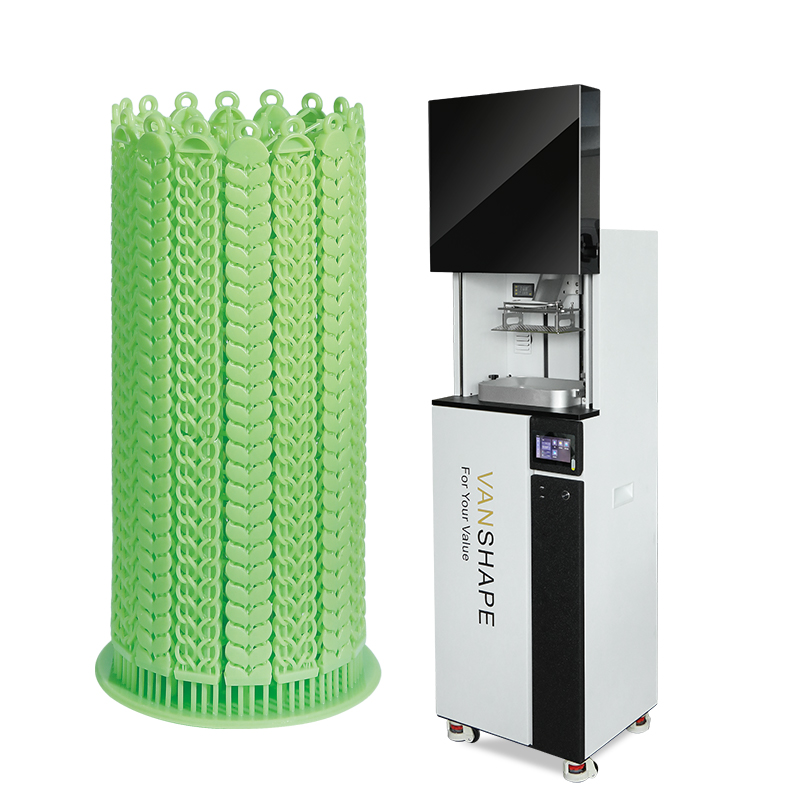
For complex jewelry designs with intricate geometry that manual wax carving cannot achieve consistently, a 3d jewelry printer produces wax models with dimensional accuracy and surface quality that exceed manual methods. This eliminates wax-model-related defects and enables design complexity that would be impossible to produce consistently by hand, ensuring that cast pieces arrive at the polishing stage with only surface-level roughness that polishing machines can effectively resolve.
Jewelry surface defects fall into two distinct categories: surface-level defects within polishing machine capability (discoloration, flash, investment roughness, mild burrs, water film texture) and structural/internal defects beyond polishing capability (porosity, dimensional distortion, deep pitting, incomplete burnout residue, pressure distortion, cracks). Attempting to polish structural defects wastes production resources and creates products with latent quality risks. The most effective quality management strategy combines capable polishing equipment for surface-level defects with upstream process prevention for structural defects—ensuring that jewelry arrives at the polishing stage with only defects that polishing machines can reliably resolve. Yihui Casting provides complete jewelry production equipment solutions—from wax injection and casting machines to polishing systems—enabling manufacturers to implement the integrated defect prevention and resolution approach that produces consistently high-quality finished jewelry. Explore Yihui Casting's full equipment range to build a production line that prevents defects upstream and resolves surface defects efficiently at the polishing stage.
 online service
Scan to wechat :