Custom jewelry design has undergone a profound transformation over the past decade, driven largely by the integration of digital technologies into traditional workshop practices. Among these technologies, the laser machine for jewelry stands out as a genuine game-changer. What once required hours of meticulous handwork—engraving intricate patterns, cutting delicate filigree, or marking hallmarks on precious metals—can now be accomplished in minutes with micron-level precision. For professional jewelry manufacturers and custom design studios alike, the adoption of laser engraving and cutting technology has redefined what is possible in terms of design complexity, production speed, and quality consistency.
This article examines how laser engraving and cutting machines are reshaping custom jewelry design workflows, from initial concept through final finishing, and why this technology has become indispensable in modern jewelry production environments.
A traditional jewelry design workflow typically follows a linear path: hand sketching, wax carving, casting, cleaning, stone setting, and finishing. When a laser machine for jewelry is integrated, the workflow becomes more flexible, parallel, and efficient. Laser technology touches multiple stages of production simultaneously, compressing timelines and unlocking new design possibilities.
The workflow begins in the digital realm. Designers create vector artwork using software such as CorelDRAW, Adobe Illustrator, or dedicated jewelry CAD programs like RhinoGold and Matrix. These files are then imported directly into the laser machine's control software—commonly EZCAD or LightBurn—where parameters such as power, speed, frequency, and number of passes are configured for the specific material and desired effect. The seamless transition from CAD to CAM eliminates the need for intermediate physical templates or stencils, reducing both material waste and human error.
In a fully laser-integrated workshop, the same piece of jewelry may pass through multiple laser-based processes. A typical sequence might include laser cutting to produce the base shape from sheet metal, followed by laser engraving for surface decoration, and finally laser marking for brand logos and purity hallmarks. This multi-stage capability means that a single laser machine for jewelry can replace several dedicated tools, simplifying equipment inventory and reducing the workshop footprint.
The core advantage of laser engraving in jewelry design is precision. A fiber laser marking machine operating at a wavelength of approximately 1064 nm achieves a focused spot size as small as 0.02 mm, enabling the reproduction of typefaces, logos, and decorative motifs at resolutions that surpass what the unaided human hand can consistently achieve. This level of detail is particularly valuable for personalized jewelry, where customer names, dates, fingerprints, or even photographic images can be engraved onto ring interiors, pendant backs, and bracelet clasps.
Laser engraving is not a one-size-fits-all process. By adjusting power, speed, and frequency settings, operators can produce a wide range of surface effects on the same metal substrate. Low power with high speed creates a light, frosted mark suitable for delicate text. Higher power with slower speed produces deeper engraving with visible relief, appropriate for decorative borders and bold logos. Frequency modulation—typically in the range of 20–80 kHz for fiber lasers—controls the overlap between individual laser pulses, affecting mark smoothness and contrast.
For gold, a common starting point is 45% power at 1500 mm/s speed and 37 kHz frequency, though these settings vary based on laser source power, lens focal length, and the specific alloy composition. Silver and platinum typically require adjusted parameters to account for their different thermal conductivity and reflectivity characteristics.
Beyond surface engraving, laser cutting has revolutionized the production of intricate jewelry components. Traditional methods such as sawing and piercing involve physical blade contact that wears tools, distorts thin metals, and limits minimum feature sizes. A laser cutter, by contrast, uses a non-contact thermal process that can cut complex filigree patterns, lattice structures, and custom pendant outlines from sheet metal without mechanical stress on the workpiece.
Material efficiency is a critical economic factor in jewelry manufacturing, where even small amounts of waste from gold or platinum sheet translate into significant financial loss. Laser cutting generates an exceptionally narrow kerf—typically 0.05 to 0.15 mm depending on the laser source and focusing optics—which allows designs to be nested tightly on a sheet. Combined with the elimination of blade-width material loss, laser cutting can improve precious metal yield by 5 to 15 percent compared to traditional mechanical cutting methods. Over high-volume production runs, this yield improvement represents a substantial cost saving.
The consumer jewelry market has seen a pronounced shift toward personalization. Customers increasingly expect the ability to customize their purchases with meaningful text, dates, symbols, or images. Meeting this demand with traditional hand engraving is economically challenging at scale—skilled engravers are scarce, and the per-piece labor cost for complex custom work can exceed the value of the jewelry item itself.
A laser engraving machine fundamentally changes this equation. Once a design is created or imported digitally, the machine can reproduce it on dozens or hundreds of identical or varied pieces with minimal operator intervention. A skilled artisan may require 30 to 60 minutes to hand-engrave a detailed monogram on a ring; a fiber laser can accomplish the same task—with equal or superior precision—in 60 to 120 seconds. This 30x productivity improvement enables jewelry businesses to offer personalization as a standard service rather than a premium add-on, expanding market reach and customer satisfaction.
Advanced laser systems support rotary attachments that enable 360-degree engraving on ring bands, bracelets, and cylindrical components. Combined with jig-based workpiece fixturing and automated loading systems, a single laser workstation can process hundreds of pieces per day in lights-out operation. For high-volume e-commerce jewelry brands and B2B manufacturers supplying retail chains, this automation capability is the difference between meeting seasonal demand peaks and losing orders to competitors.
One of the more sophisticated capabilities of modern laser machines for jewelry is color marking, made possible by MOPA (Master Oscillator Power Amplifier) fiber laser technology. By precisely controlling pulse duration and frequency, MOPA lasers can induce controlled oxidation layers on stainless steel and titanium surfaces, producing a spectrum of visible colors without dyes, pigments, or coatings. This effect is permanent, biocompatible, and adds a distinctive aesthetic dimension to contemporary jewelry designs.
Applications of color laser marking in jewelry include multi-tone logos on watch cases, rainbow-effect decorative bands on titanium rings, and gradient color patterns on stainless steel pendants. The ability to create these effects digitally, without additional consumables or post-processing steps, represents a meaningful competitive advantage for studios offering avant-garde or technology-forward jewelry collections.
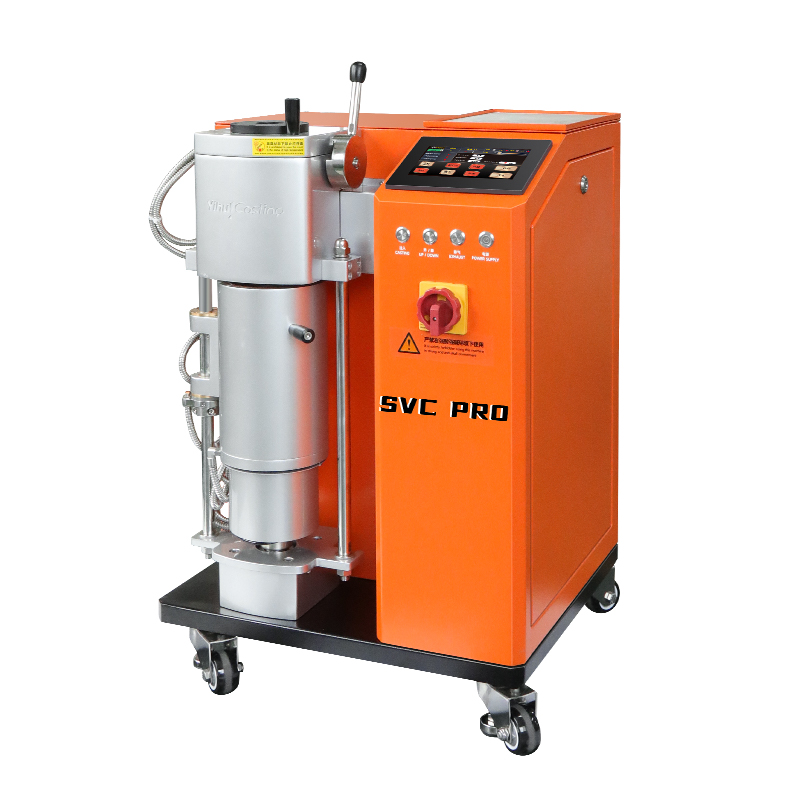
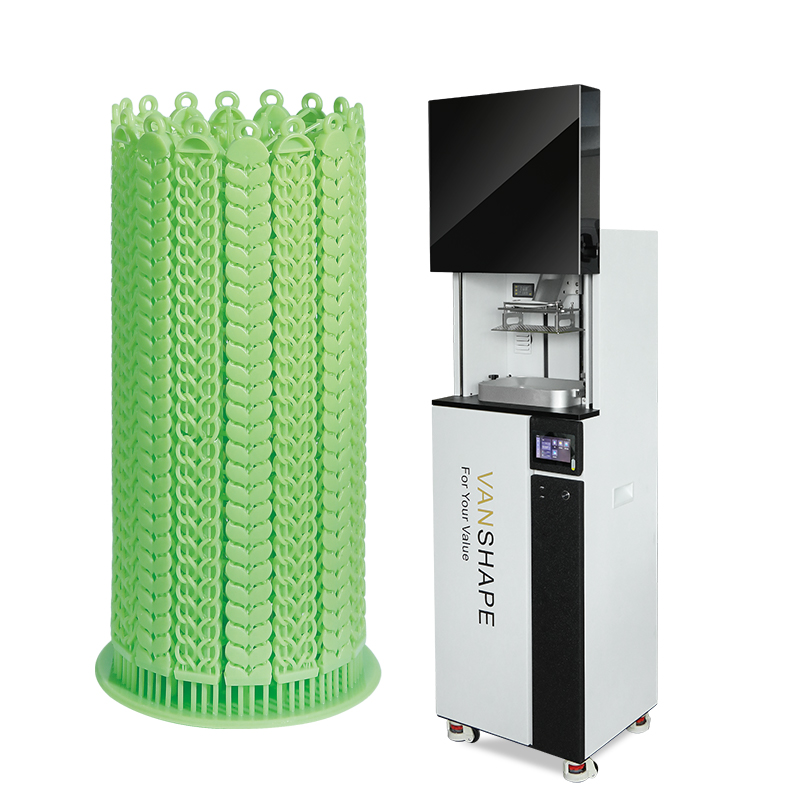
While a laser machine brings transformative capabilities to a workshop, its full potential is realized when integrated with complementary jewelry production equipment. A vacuum pressure casting machine produces high-quality castings that can then be engraved or marked by laser. A 3D jewelry printer creates resin patterns for investment casting, and the resulting metal pieces can receive laser-applied hallmarks and decorative engraving. This digital workflow—3D printing, casting, and laser finishing—represents the current state of the art in jewelry manufacturing, combining additive manufacturing precision with laser marking's speed and versatility.
The integration of laser engraving and cutting machines into custom jewelry design workflows represents more than an incremental improvement in productivity—it is a fundamental redefinition of what a jewelry workshop can produce, how quickly it can produce it, and at what cost. From micron-precision engraving and material-efficient cutting to scalable personalization and advanced color marking effects, laser technology addresses the core challenges facing modern jewelry manufacturers: demand for customization, pressure on turnaround times, and the need to control precious metal waste.
For jewelry businesses evaluating their technology roadmap, a fiber laser marking and engraving machine should be considered a foundational investment—one that touches nearly every stage of production and opens revenue streams that traditional methods cannot support. To explore how a laser machine can transform your jewelry production workflow, Yihui Casting offers professional-grade laser systems designed specifically for the demands of precious metal processing. Contact our team to discuss your requirements and schedule a consultation.
 online service
Scan to wechat :