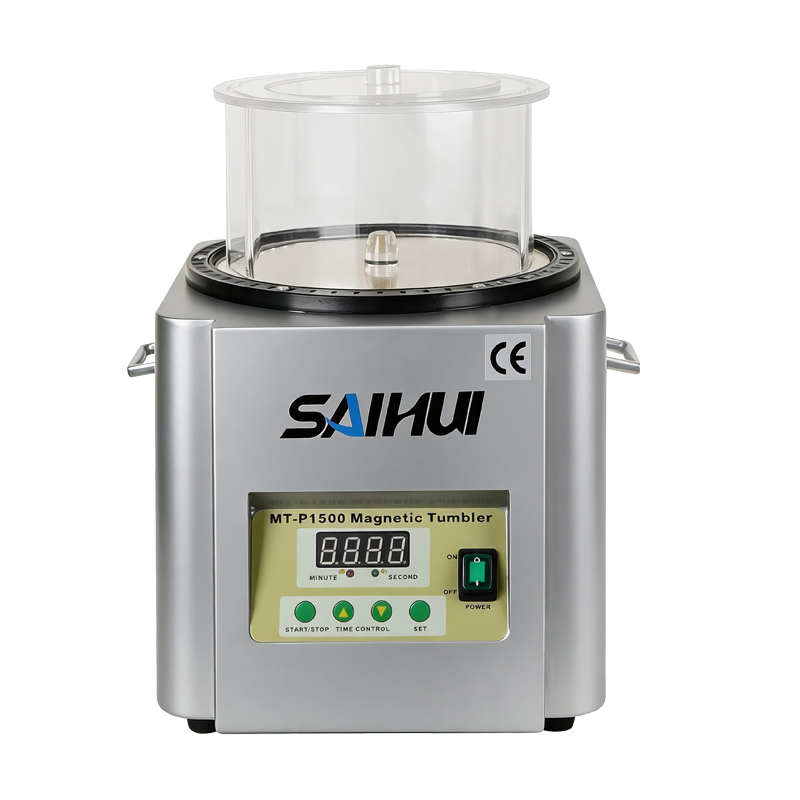
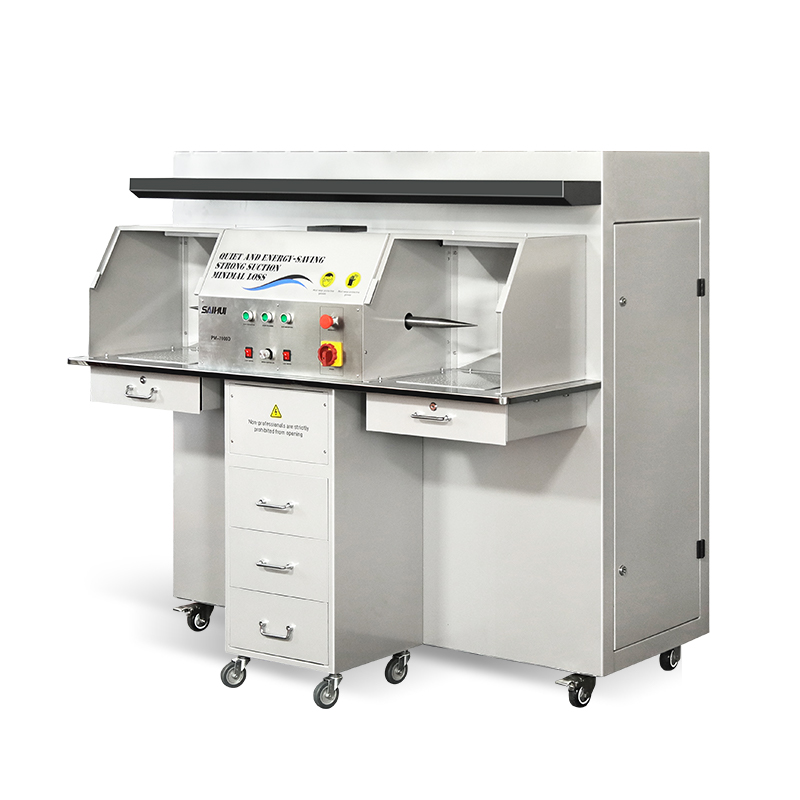
A jewelry polishing machine is the final step in the production chain where raw castings become finished jewelry pieces. The quality of your polishing output—surface brilliance, uniform finish, absence of scratches and pits—depends directly on the condition of your polishing media and machine components. Over time, media wears down, abrasives lose their cutting power, and mechanical parts degrade from continuous operation. When these elements reach the end of their effective service life, polishing quality deteriorates in ways that are often gradual and easy to overlook until the cumulative effect becomes visible in your finished products.
This article identifies the specific signs that indicate your polishing machine media and components need replacement, explains the consequences of operating with degraded materials, and provides replacement schedules that keep your polishing output consistent and professional.
Tumbling media—whether ceramic, plastic, or walnut shell—is the primary abrasive agent in vibratory and rotary polishing machines used for jewelry. Media wears through two mechanisms: physical attrition (pieces breaking down from impact and friction) and abrasive depletion (the cutting particles embedded in the media surface wearing smooth).
Sign 1: Increased Cycle Time for the Same Finish Quality
If a polishing cycle that previously produced your standard finish in 2 hours now requires 3 or 4 hours to achieve the same result, your media has lost effective abrasive power. This is the most reliable early indicator of media exhaustion. Track your cycle times carefully—any consistent increase of more than 20 percent from your baseline indicates that the media needs replacement or supplementation with fresh material.
Sign 2: Visible Media Size Reduction
Compare your current media against a fresh sample of the same type. Tumbling media shrinks as it wears—ceramic media pieces become smaller and rounded, plastic media loses its defined shape and cutting edges. When media pieces have shrunk by more than 30 percent from their original size, they no longer reach into recesses and detailed areas of the jewelry pieces, producing uneven polish with bright flat surfaces but dull or unfinished detail areas.
Sign 3: Media Breakage and Fragment Accumulation
As media reaches the end of its structural life, pieces begin to fracture and crumble. Small fragments accumulate in the machine bowl, reducing effective media-to-parts ratio and creating a slurry that cushions impact rather than delivering abrasive action. If you see a significant accumulation of small fragments when you screen your media after a cycle, the media batch is past its useful life. Continuing to use fragmented media also risks small pieces lodging in jewelry settings and recesses, creating finish defects that require manual removal.
Sign 4: Media Surface Appears Smooth or Polished
Ceramic and plastic tumbling media rely on embedded abrasive grains—typically aluminum oxide or silicon carbide—to cut and finish metal surfaces. When these grains wear down, the media surface itself appears smooth and polished under magnification. Smooth media slides over the jewelry surface without cutting, producing a burnishing effect rather than a true abrasive polish. This results in a surface that looks shiny under casual inspection but lacks the micro-finish quality that professional jewelry requires.
Replacement Strategy for Tumbling Media
Rather than replacing your entire media batch at once—which is costly and produces a sudden shift in polishing behavior—most workshops use a media replenishment strategy. Add 10 to 20 percent fresh media to the machine bowl at each cycle, and remove the smallest and most worn pieces by screening. This approach maintains consistent abrasive action and avoids the abrupt quality change that full-batch replacement creates. Over time, the media population reaches a stable mix of fresh and partially worn pieces that delivers predictable results.
Full media replacement is warranted when cycle times have increased by more than 50 percent, when fragment accumulation exceeds 30 percent of the total media volume, or when the media has been in service for more than its rated cycle life—typically 200 to 400 hours for ceramic media and 100 to 200 hours for plastic media, depending on the metal type being polished.
Polishing machines that use rotating wheels, buffs, and brushes for bench polishing or automated polishing require periodic replacement of these consumable components.
Sign 1: Wheel or Buff Diameter Reduction
Polishing wheels and buffs wear concentrically—their diameter decreases as the outer layers of material are consumed through contact with jewelry pieces. When a wheel's diameter has decreased by more than 25 percent from its original size, its peripheral speed drops significantly even at the same RPM, reducing cutting and polishing action. The machine operator compensates by increasing pressure, which accelerates remaining wear and can cause overheating of the jewelry surface. Replace wheels and buffs when diameter reduction exceeds 20 percent.
Sign 2: Uneven or Grooved Wheel Surface
Polishing wheels develop grooves and uneven wear patterns from repeated contact with specific jewelry shapes—ring bands create concentric grooves, flat pieces create flat spots. An uneven wheel surface produces inconsistent polish across different jewelry surfaces: some areas receive heavy abrasive contact while others barely touch the wheel. Inspect wheel surfaces regularly, and replace wheels that show grooves deeper than 2mm or surface unevenness visible to the naked eye.
Sign 3: Brush Fiber Loss and Stiffness Change
Polishing brushes lose fibers through breakage and pull-out during operation. As fiber density decreases, the brush delivers less uniform contact with the jewelry surface, producing patchy polish. Additionally, remaining fibers can stiffen from accumulated polishing compound and metal residue, creating a harsh scratchy action instead of the designed soft polishing contact. Replace brushes when fiber loss exceeds 20 percent of the original density, or when remaining fibers feel stiff and gritty to touch.
Sign 4: Compound Loading and Clogging
Polishing compound accumulates on wheel and buff surfaces over time. While a moderate compound layer is normal and desirable—it is the abrasive agent that actually does the polishing—excessive loading creates a hard, glazed surface that no longer responds to fresh compound application. A glazed wheel produces a slick, inconsistent finish and may generate enough friction heat to discolor thin metal sections. If a wheel or buff feels hard and smooth despite compound application, and fresh compound does not adhere properly, the wheel or buff needs replacement.
Beyond consumable media, the jewelry polishing machine itself contains mechanical components that wear over time and affect polishing quality when degraded.
Motor and Drive System
Polishing machine motors gradually lose speed consistency as bearings wear and electrical insulation degrades. A motor that runs 5 to 10 percent slower than its rated speed reduces peripheral velocity on polishing wheels, directly reducing polishing action. If your machine produces noticeably slower polish than it did when new—and media and wheels are in good condition—check motor RPM with a tachometer. Replace bearings or the motor assembly if speed deviation exceeds 10 percent from specification.
Vibratory Bowl Liner
The rubber or polyurethane liner inside a vibratory polishing bowl protects both the media and the jewelry pieces from direct contact with the metal bowl surface. Liners wear through continuous media abrasion, developing thin spots, cracks, and tears. A torn liner allows media and jewelry to contact bare metal, creating surface scratches and increasing noise and vibration. Inspect the bowl liner monthly, and replace it when any area shows thinning below 50 percent of original thickness or when cracks or tears appear.
Vibratory Drive Springs and Motor Mounts
Vibratory machines rely on tuned spring and motor mount systems to deliver the correct vibration amplitude and frequency to the bowl. As springs fatigue and mounts compress, vibration characteristics shift—typically reducing amplitude and changing the media motion pattern inside the bowl. This produces less effective media-to-part contact and longer cycle times. If your vibratory machine sounds different (a deeper, less resonant hum) or if media movement inside the bowl appears sluggish compared to when the machine was new, inspect and replace the drive springs and motor mounts.
Bearings and Shaft Assemblies
Rotary polishing machines depend on smooth, precise shaft rotation for wheel and buff alignment. Worn bearings produce shaft wobble that translates to wheel vibration—an unstable polishing contact that produces uneven finish and can create safety hazards from wheel imbalance. Replace bearings when shaft runout exceeds 0.05mm measured at the wheel mounting point, or when bearing noise is audible during operation.
Polishing compound is a consumable, but its performance degrades even before it reaches the wheel surface. Compound that has been stored improperly—or stored too long—loses effectiveness.
Sign 1: Compound Has Dried, Cracked, or Separated
Polishing compound contains oils and binders that keep the abrasive grains suspended in a workable paste. Over time, these oils evaporate or separate, leaving the compound dry, crumbly, or separated into abrasive grain and oil layers. Dry compound does not adhere properly to polishing wheels, reducing abrasive delivery. Separated compound delivers inconsistent abrasive concentration. Replace compound that shows any of these storage degradation signs.
Sign 2: Compound Color Has Changed
Most polishing compounds are color-coded by abrasive type and grit: red for tripoli, green for stainless, white for final polish, etc. If a compound's color has faded, darkened, or shifted from its original shade, the abrasive grains may have oxidized or the binder has degraded. Discolored compound produces unpredictable polishing results and should be replaced.
Sign 3: Polishing Results Are Inconsistent Despite Fresh Application
If you apply fresh compound to a fresh wheel and still get inconsistent polish—patchy brightness, scratch lines, or uneven texture—the compound itself may be degraded. Test with a new stick of the same compound type. If the new compound produces the expected result, discard the old batch.
Recognizing the signs that your jewelry polishing machine media and components need replacement is essential for maintaining the surface quality that distinguishes professional jewelry from amateur work. The indicators described in this article—from increased cycle times and media size reduction to wheel wear patterns and compound degradation—provide a comprehensive checklist that you can apply to every type of polishing consumable and machine component in your workshop.
The common mistake in polishing maintenance is waiting too long to replace worn items. Because polishing quality degrades gradually, each small decline is easy to rationalize as acceptable—until the cumulative effect produces a surface that no longer meets professional standards. By establishing objective replacement criteria—cycle time thresholds, diameter reduction limits, fiber loss percentages—you create a decision framework that removes subjective judgment and ensures timely replacement.
Operating with fresh media, properly sized wheels, and quality compound does not cost more—it costs less, because each polishing cycle produces the desired result in the expected time without rework. Degraded media and components cost more in extended cycle times, rework labor, and inconsistent quality that erodes customer confidence.
For jewelry polishing machines built for durability, consistent performance, and easy component replacement, explore the complete range from Yihui Casting. Our polishing equipment is engineered with modular consumable systems and accessible service points that simplify maintenance and keep your finishing operation running at professional quality standards.
 online service
Scan to wechat :