Setting up a jewelry manufacturing workshop requires far more than a single casting machine. From the initial digital design to the final polished piece, jewelry production involves a sequence of highly specialized processes, each demanding dedicated equipment engineered to exacting tolerances. For workshop owners and production managers, understanding the full scope of machinery required is the first step toward building an efficient, profitable operation. A Yihui Casting one-stop solution for jewelry casting eliminates the guesswork by bundling every essential machine into a coordinated package, ensuring compatibility across the entire workflow.
This article provides a detailed breakdown of the equipment categories included in a complete jewelry casting production line, explaining the role of each machine, its technical specifications, and how it integrates with upstream and downstream processes. Whether you are establishing a new workshop or upgrading an existing facility, this guide will help you understand what a truly comprehensive equipment suite should contain.
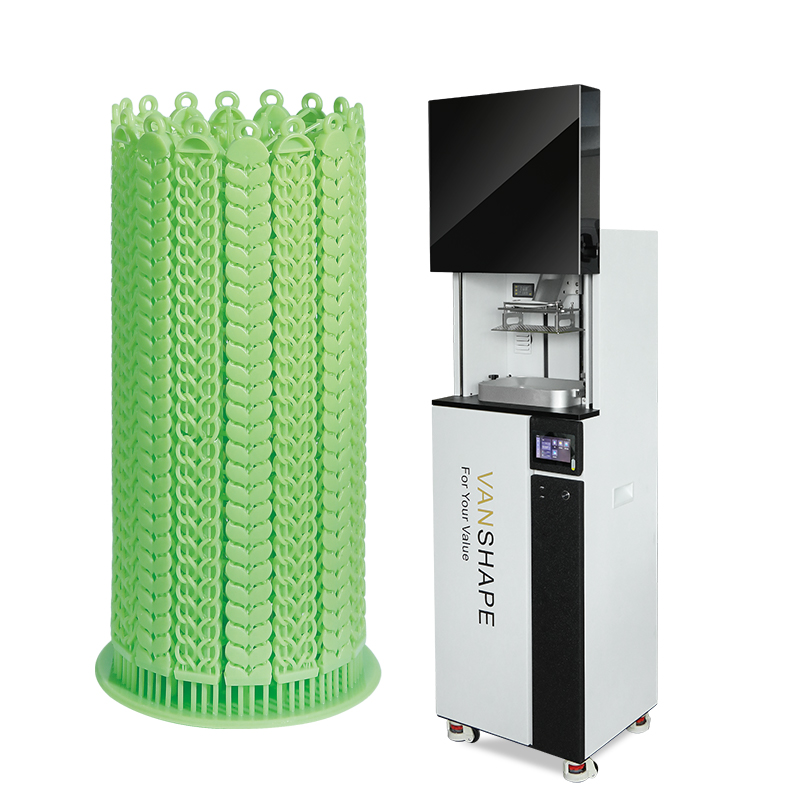
Modern jewelry production begins in the digital realm. CAD designers create precise models using specialized jewelry design software, and these digital files must be translated into physical patterns for casting. This is where 3D jewelry printers enter the production line.
Professional-grade resin 3D printers for jewelry use digital light processing (DLP) or stereolithography (SLA) technology to produce casting patterns with layer resolutions as fine as 10 to 25 microns. These patterns are engineered to burn out cleanly during the investment casting process, leaving no ash residue that could create casting defects. A high-quality jewelry 3D printer should offer build volumes sufficient for production batches—typically 100 x 60 x 100 mm or larger—and should support castable resins with verified burnout schedules provided by the manufacturer.
In a one-stop equipment package, the 3D printer serves as the entry point for the entire workflow. Digital designs are printed overnight, and the resulting patterns move directly to the mold-making or tree-assembly station the following morning, creating a continuous production pipeline.
For production runs that require repeated reproduction of identical pieces, silicone rubber molds remain the industry standard. A complete production line includes vulcanizing presses that apply controlled heat and pressure to create durable silicone molds from master patterns. These molds can withstand hundreds of wax injection cycles, making them essential for scaling production beyond one-off custom pieces.
Professional vulcanizing presses should offer temperature control accurate to within ±2°C, adjustable clamping pressure up to several tons, and programmable cure cycles. The mold making stage directly affects dimensional accuracy downstream, making equipment quality a critical factor in overall product consistency.
Once molds are created, wax patterns are produced using vacuum wax injection machines. These machines melt jewelry-grade casting wax to a precisely controlled temperature and inject it into silicone molds under vacuum pressure. The vacuum environment eliminates air bubbles and ensures complete fill of fine details, particularly in filigree work and intricate settings.
Key specifications to evaluate include wax tank capacity (typically 2 to 5 kg for workshop-scale machines), injection pressure range (0.2 to 0.7 MPa), and vacuum pump capacity. Temperature stability is paramount—fluctuations of even a few degrees can cause wax shrinkage, dimensional variation, or surface defects that propagate through the entire casting process. In a jewelry casting equipment suite sourced from a single supplier, the wax injector is matched to the casting machine capacity, ensuring that wax pattern output keeps pace with casting cycles.
The melting furnace is the heart of any jewelry casting operation. Induction melting furnaces are the preferred choice for professional workshops due to their rapid heating cycles, precise temperature control, and electromagnetic stirring action that ensures homogeneous alloy composition. A quality induction furnace can melt gold, silver, platinum, and copper alloys with temperature accuracy of ±5°C across a range of 200°C to 2000°C.
Crucible capacity should be matched to expected batch sizes—typical jewelry workshop furnaces offer 1 kg to 6 kg gold capacity. Advanced models feature programmable temperature curves, protective atmosphere options (argon or nitrogen), and integrated weighing systems that simplify alloy formulation. The melting furnace must be sized to feed the casting machine at optimal cycle times, avoiding bottlenecks where molten metal sits idle and degrades.
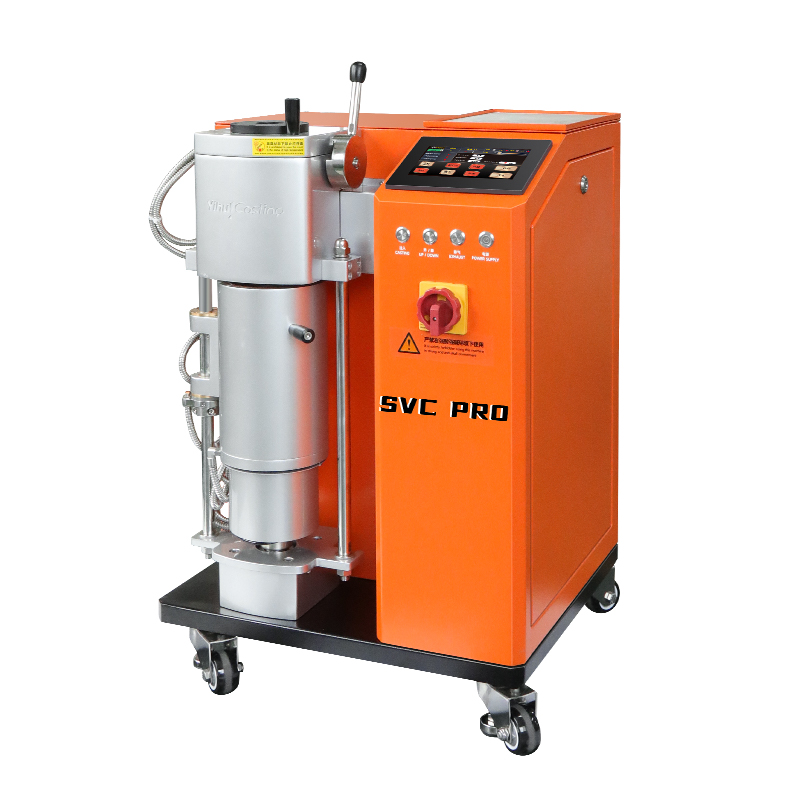
The vacuum pressure casting machine represents the culmination of the casting process. This equipment combines vacuum and overpressure casting technology to produce dense, porosity-free castings with exceptional detail reproduction. The process works by creating a vacuum in the flask chamber to draw molten metal into the investment mold, then applying overpressure (typically 0.3 to 0.5 MPa) to compress the metal and eliminate shrinkage porosity.
A professional vacuum pressure casting machine should offer flask sizes compatible with your production scale (commonly 3 to 9 inch diameter flasks), programmable vacuum and pressure sequences, and integrated cooling systems. The machine's PLC controller should store multiple casting programs for different alloys and product types, allowing operators to switch between gold, silver, and platinum casting with minimal setup time. Temperature measurement should use both thermocouple and optical pyrometer systems for redundancy and accuracy at high temperatures.
In a complete production line, the casting machine receives prepared wax trees directly from the burnout furnace, and its output—raw castings—moves immediately to post-processing. This handoff must be seamless, with flask sizes and tree designs standardized across the workflow.
After casting, jewelry pieces require assembly, repair, and finishing. Laser welding machines have become indispensable in modern jewelry workshops, offering precise, localized heat input that joins metal components without damaging nearby stones or heat-sensitive areas. Jewelry laser welders typically use pulsed Nd:YAG or fiber laser sources with average power outputs of 60 to 200 watts.
Key capabilities include spot diameter adjustment (0.1 to 2.0 mm), pulse energy control, and argon gas shielding for oxidation-free welds. In a one-stop equipment suite, the laser welder handles tasks ranging from reattaching cast components and filling porosity to setting clasps and repairing delicate filigree.
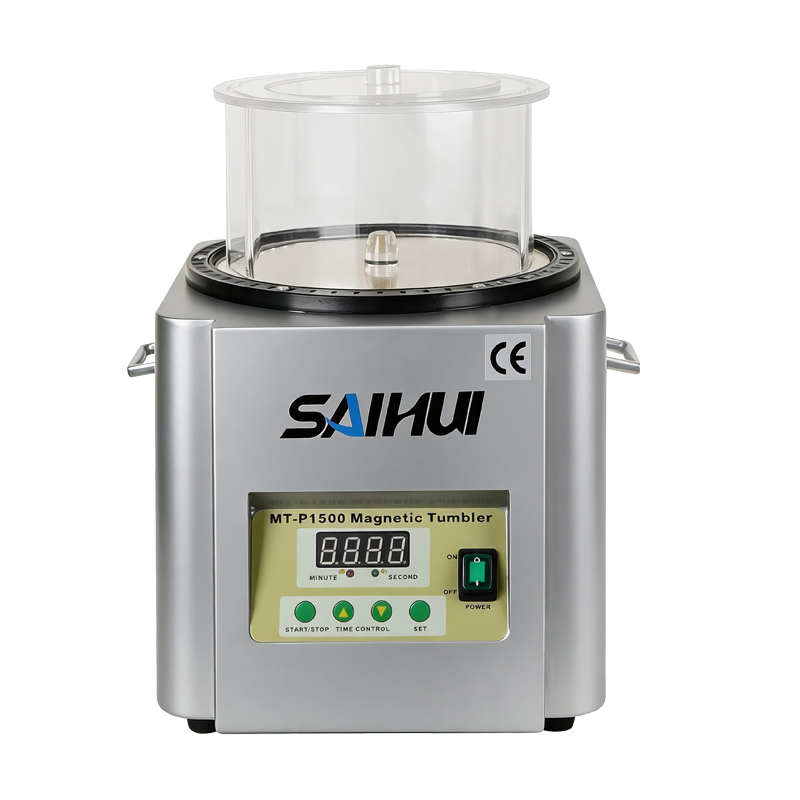
The final stage of the production line transforms raw castings into retail-ready jewelry. Polishing equipment ranges from traditional buffing lathes with cotton wheels to automated magnetic polishing machines that use tumbling media in vibrating or rotating containers. A complete line may include:
Magnetic polishers for initial deburring and surface smoothing of cast pieces
Centrifugal disc finishers for intermediate polishing stages
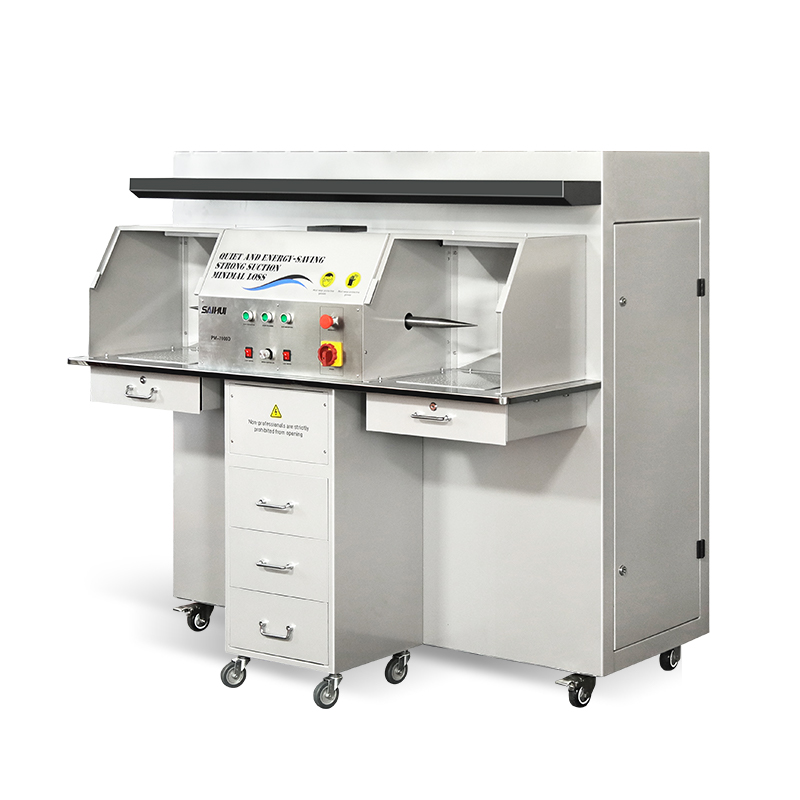
Buffing stations with variable-speed motors and dust collection systems
Ultrasonic cleaners for removing polishing compounds and investment residue
The polishing stage often represents the most labor-intensive portion of jewelry production, making equipment selection critical for controlling labor costs and achieving consistent quality across production batches.
Beyond the core production stages, a complete one-stop solution includes supporting equipment that ensures quality and operational efficiency:
Burnout furnaces: Programmable kilns that remove wax from investment molds and create the thermal profile necessary for defect-free casting. These must offer precise ramp-and-hold programming with temperature uniformity across the chamber.
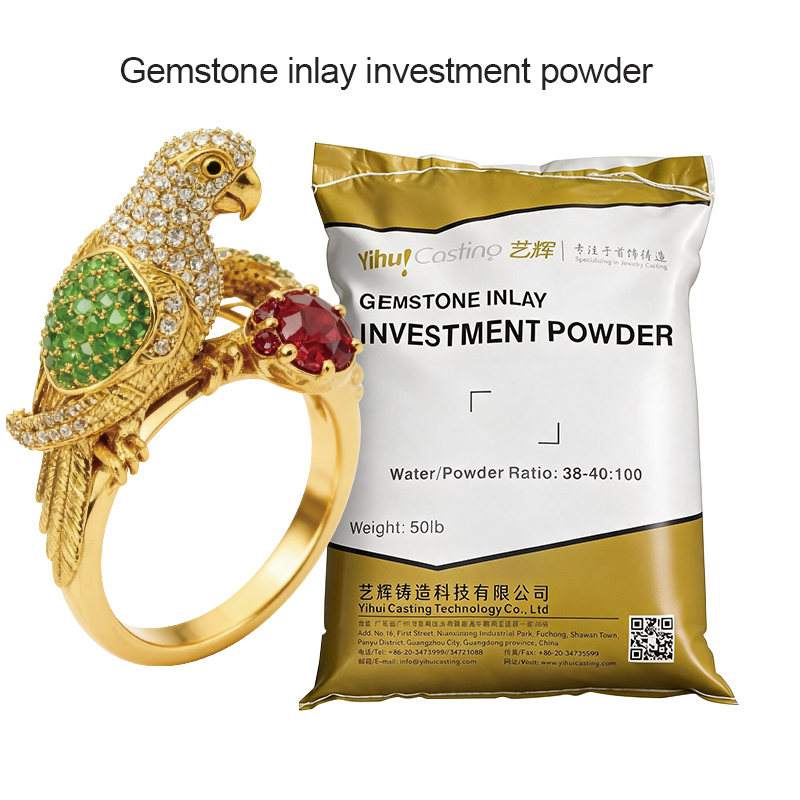
Investment mixing equipment: Vacuum mixing machines that combine investment powder with water under vacuum, eliminating bubbles that would create surface defects on castings.
Quenching and cleaning stations: Dedicated areas with water tanks, high-pressure washers, and ultrasonic baths for removing investment from completed castings.
Quality control instruments: Digital scales, density measurement devices for porosity detection, and optical inspection equipment.
These auxiliary systems are frequently overlooked when workshop owners assemble equipment piece by piece from multiple suppliers. A one-stop solution ensures that every necessary component is included and that capacity is balanced across all stages.
A complete jewelry casting production line encompasses equipment spanning digital design, mold making, wax reproduction, melting, casting, post-casting processing, and quality control. Each machine plays a defined role in the workflow, and the performance of each stage depends on the quality and compatibility of the equipment feeding it. When these machines are sourced as an integrated package rather than assembled piecemeal, workshops benefit from guaranteed compatibility, balanced production capacity, and unified technical support.
The one-stop solution for jewelry casting approach eliminates the integration risks associated with multi-supplier sourcing and provides a clear upgrade path as production demands grow. For workshop owners seeking to establish or expand a jewelry manufacturing operation, investing in a complete, coordinated equipment suite is the most reliable path to achieving consistent quality and efficient throughput.
To explore a comprehensive range of jewelry casting machinery engineered to work together as a unified production system, visit Yihui Casting and discover how a one-stop equipment solution can transform your workshop's capabilities.
 online service
Scan to wechat :