Selecting the correct temperature range for a jewelry melting furnace is one of the most consequential decisions a workshop manager can make. The furnace must reach temperatures high enough to fully liquefy the target metal or alloy, yet maintain the precision needed to avoid overheating, oxidation, and metal loss. Gold, silver, and platinum each have distinct melting characteristics, and the alloys commonly used in jewelry production introduce additional variables. This guide examines the melting points of key jewelry metals, explains how to match those requirements to furnace specifications, and outlines the practical factors that influence temperature range selection.
The first step in selecting a furnace is understanding the melting points of the metals you work with. Pure gold melts at approximately 1,064°C (1,947°F), while pure silver melts at 961.8°C (1,763°F). Platinum presents a significantly higher requirement, melting at 1,768°C (3,214°F). Copper, frequently used as an alloying element, melts at 1,085°C (1,985°F).
However, jewelry production rarely involves pure metals alone. Karat gold alloys behave differently from pure gold. For example, 18K gold (75% gold) typically has a melting range of 950°C to 1,040°C depending on the alloying metals used. Fourteen-karat gold melts in an even broader range, from approximately 880°C to 1,010°C. Sterling silver (92.5% silver, 7.5% copper) melts around 893°C, lower than pure silver due to the copper-silver eutectic effect. Platinum alloys used in jewelry, such as platinum-iridium or platinum-cobalt, may have melting points slightly different from pure platinum but generally remain above 1,700°C.
These variations mean that a furnace used for multiple metal types must accommodate a wide temperature span. A workshop casting both sterling silver and platinum alloys needs a furnace capable of reaching at least 1,800°C, even though silver work requires far less heat.
A common mistake in furnace selection is assuming that the melting point of the metal equals the required furnace temperature. In practice, the furnace must exceed the melting point by a working margin to ensure complete liquefaction, proper flow for casting, and stable temperature during the pour. This margin typically ranges from 50°C to 150°C above the melting point, depending on the metal and the casting method.
For gold alloys, a working temperature of 1,050°C to 1,150°C is standard. Silver casting often requires 1,000°C to 1,050°C. Platinum demands working temperatures of 1,850°C to 2,000°C, which means the furnace must sustain temperatures well above 1,800°C for extended periods. This distinction is critical because a furnace rated to a maximum temperature of 1,200°C may be adequate for gold and silver but entirely unsuitable for platinum work.
Furthermore, the rate at which a furnace reaches the target temperature affects production efficiency. Induction furnaces, which use electromagnetic fields to heat the metal directly, can reach operating temperature in minutes. Resistance furnaces, which heat the crucible externally, generally take longer but offer simpler operation for smaller batches. When working with platinum, the ability to reach and maintain high temperatures quickly reduces the risk of metal contamination from prolonged exposure to air.
Maximum temperature is only one specification. Temperature control precision is equally important, particularly when working with alloys that have narrow melting ranges. A furnace with poor temperature regulation can overshoot the target, causing oxidation, excessive gas absorption, or even vaporization of volatile alloying elements such as zinc.
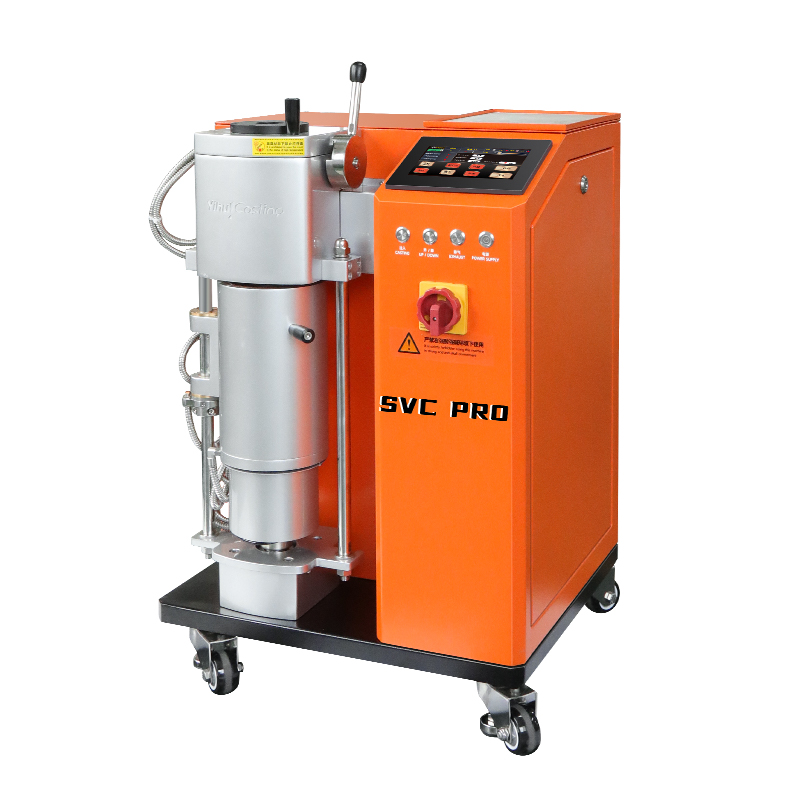
Modern vacuum pressure casting machine systems integrate precise thermocouple or infrared pyrometer readings with programmable temperature controllers. These systems maintain temperature within ±2°C to ±5°C of the set point, which is essential for repeatable casting quality. For gold and silver work, a control precision of ±5°C is generally sufficient. Platinum casting benefits from tighter control, as the higher temperatures involved amplify the effects of temperature deviation.
Temperature uniformity within the melt is another consideration. Induction furnaces provide electromagnetic stirring, which naturally homogenizes the molten metal and ensures consistent temperature throughout the crucible. Resistance furnaces rely on convection and conduction, which can create temperature gradients in larger melts. For workshops producing consistent quality jewelry, this factor may influence the choice between induction and resistance heating.
To select the right temperature range, begin by cataloging every metal and alloy your workshop processes. List the highest melting point among these materials and add a working margin of at least 100°C. This figure represents the minimum maximum temperature your furnace must achieve. If the workshop processes platinum, the furnace should be rated for at least 1,900°C to 2,000°C. If only gold and silver are used, a furnace rated to 1,200°C to 1,300°C may suffice.
Consider also the production volume and batch frequency. High-volume workshops benefit from furnaces with rapid heating cycles and robust thermal insulation, which reduce energy waste during repeated melts. Low-volume or artisan workshops may prioritize versatility and ease of use over raw speed. In either case, the furnace should maintain stable temperature throughout the casting cycle, as temperature drops during pouring can cause premature solidification and casting defects.
The crucible material must also be compatible with the operating temperature. Graphite crucibles are suitable for gold and silver up to approximately 1,600°C but degrade quickly at platinum temperatures. Alumina or zirconia crucibles are necessary for platinum work, as they withstand temperatures above 1,800°C without contaminating the melt. Selecting a furnace that accommodates the appropriate crucible type for your target temperature range is essential for both metal quality and equipment longevity.
Several casting defects trace directly to improper temperature management. Porosity in cast pieces often results from overheating, which increases gas absorption in the molten metal. Incomplete fills, where the mold does not fully receive the metal, typically indicate insufficient pouring temperature. Surface oxidation and discoloration can occur when the furnace operates at temperatures above the alloy's optimal range without protective atmosphere or flux.
To mitigate these issues, establish documented temperature protocols for each alloy your workshop uses. Record the set temperature, the actual melt temperature as measured by a pyrometer, and the pouring temperature. Over time, this data reveals the optimal parameters for each material and helps identify furnace performance drift before it affects product quality.
Regular calibration of temperature sensors is also necessary. Thermocouples degrade with use, particularly at high temperatures, and a drifted sensor can cause the furnace controller to maintain incorrect temperatures. For workshops processing platinum, calibrating sensors monthly is a reasonable practice. For gold and silver work, quarterly calibration may be adequate.
Selecting the appropriate temperature range for a jewelry melting furnace requires a clear understanding of the metals and alloys in your production schedule, the distinction between melting points and working temperatures, and the precision of temperature control needed for consistent casting results. Workshops processing platinum need furnaces rated to 1,900°C or higher, while those working exclusively with gold and silver can operate effectively at lower ranges. Temperature control precision, crucible compatibility, and regular sensor calibration all contribute to maintaining casting quality over time.
If you are evaluating jewelry casting equipment for your workshop, consider the full range of metals you currently process and those you may add in the future. Investing in a furnace with adequate temperature range and control precision from the outset prevents costly equipment upgrades and production disruptions down the line. Yihui Casting offers a selection of melting furnaces designed for precious metal processing, with specifications tailored to different production requirements. Visit our product pages to compare models and find the furnace that matches your temperature range needs.
 online service
Scan to wechat :