The success of lost wax casting using 3D printed patterns depends fundamentally on the resin material used to produce those patterns. Not all photopolymer resins are suitable for investment casting—standard resins expand aggressively when heated, leave significant ash residue, and can crack the investment mold during burnout. Castable resins are specifically formulated to burn out cleanly, leaving minimal residue and mimicking the thermal behavior of traditional injection wax. However, castable resins vary significantly in composition, burnout characteristics, and compatibility with different metals and printer technologies. This article provides a technical guide to resin compatibility for 3d jewelry printer systems used in lost wax casting, helping jewelry workshop professionals select the right material for their specific casting applications.
Castable resins for jewelry 3D printing fall into three primary categories based on their composition. Each category has distinct thermal properties, handling characteristics, and optimal applications. Understanding these categories is essential for selecting the appropriate resin for a given casting project.
Wax-based resins incorporate a percentage of actual wax into the photopolymer formulation, typically ranging from 20% to 40% by volume. These resins are designed to mimic the thermal expansion and burnout behavior of traditional jewelry injection wax, making them the most compatible with standard investment casting burnout schedules.
The wax content causes the resin to soften and flow during the early stages of burnout, similar to how injection wax melts and drains from the mold before the polymer component combusts. This behavior reduces thermal shock to the investment and minimizes the risk of mold cracking. Wax-loaded resins are particularly well-suited for heavier pieces such as large signet rings, bracelet sections, and chunky pendant designs where the greater material volume amplifies thermal expansion concerns.
The trade-off of high wax content is that the printed patterns are softer in their uncured (green) state. Resins with 40% wax content are notably fragile before post-curing and require careful handling during support removal and tree assembly. Supports must be placed on surfaces that will be finished or polished after casting, never across pave settings, engraving, or other detail-critical areas.
Wax-filled resins disperse real wax particles within a photopolymer matrix, combining the detail reproduction capability of polymer resins with the clean burnout properties of wax. These resins typically achieve very low ash content—some formulations are certified at 0.03% residual ash or lower. The wax component ensures clean thermal decomposition while the polymer component provides the dimensional stability and surface hardness needed for fine detail printing.
Wax-filled resins are versatile materials suitable for a wide range of jewelry applications, from medium-weight rings to detailed charm designs. They offer a balance between the thermal forgiveness of wax-based resins and the print quality of pure polymer resins, making them a practical choice for workshops that produce varied designs and prefer to stock a single resin type.
Pure polymer castable resins contain no wax component and rely entirely on the polymer formulation for clean burnout. These resins produce harder, more dimensionally stable green parts that hold fine detail exceptionally well—particularly prong configurations, milgrain edges, and pave setting geometry. The trade-off is that they require stricter adherence to burnout schedules and are less tolerant of process deviations.
Without the wax component to buffer thermal expansion, pure polymer resins expand more aggressively during the early stages of burnout. The burnout schedule must ramp temperature carefully to allow the polymer to soften and decompress before full combustion. Deviations from the recommended schedule—such as rapid temperature increases or insufficient hold times at intermediate temperatures—can cause mold cracking or ash residue that defects the casting.
For workshops with well-controlled burnout equipment and experienced operators, pure polymer resins offer the highest level of detail reproduction. For workshops new to 3D printed pattern casting, wax-based or wax-filled resins provide a more forgiving entry point.
The burnout schedule—the programmed temperature ramp and hold times that eliminate the pattern from the investment mold—is the single most critical factor in successful casting with 3D printed patterns. Even the best castable resin will produce defective castings if the burnout schedule is incorrect. The burnout schedule must be matched to the resin type and followed precisely.
Ash residue is the primary indicator of burnout quality. After the burnout cycle is complete, any non-combusted material remains as ash inside the mold cavity. When molten metal is introduced, this ash becomes trapped in the casting, creating inclusions, surface defects, and gas porosity. For high-quality jewelry casting, ash content should be below 0.1% by weight, and preferably below 0.05%.
Different resin formulations achieve different ash content levels:
Zero-ash wax resins: Some wax-loaded formulations achieve 0% residual ash when burned out according to the manufacturer's schedule. These are the gold standard for investment casting and produce castings equivalent to those from traditional injection wax.
Low-ash wax-filled resins: Typically achieve 0.03% to 0.1% ash content. This level is acceptable for most jewelry applications and does not produce visible defects in standard casting.
Pure polymer resins: Ash content varies by formulation and burnout discipline. Well-optimized schedules can achieve below 0.1%, but process deviations can increase ash significantly.
Standard (non-castable) resins: Produce 1% to 5% or more ash residue. These resins must never be used for investment casting, as they will crack the investment mold and produce severely defective castings.
The burnout schedule itself typically involves several temperature stages: an initial low-temperature hold (150 to 200 degrees Celsius) to soften the pattern and allow wax to drain, a mid-temperature ramp (300 to 500 degrees Celsius) to decompose the polymer component, and a high-temperature hold (700 to 750 degrees Celsius) to eliminate all carbon residue. The total burnout cycle ranges from 6 to 12 hours depending on flask size and resin type. Skipping stages or accelerating ramps to save time will compromise casting quality.
If patterns are sent to an external casting house, the resin type and recommended burnout schedule must be communicated to the caster. Casting houses that are unfamiliar with a specific resin may apply a generic wax burnout schedule, which may not be adequate for polymer-heavy formulations. Providing the resin manufacturer's burnout documentation ensures that the caster uses the correct parameters.
The surface finish of the cast metal is a direct replica of the 3D printed pattern surface, which in turn depends on the resin's printing characteristics and the printer's resolution. Every detail printed on the pattern—including layer lines, pixel boundaries, and support marks—will transfer to the investment mold and subsequently to the cast metal.
Resin formulation affects surface finish in several ways. Wax-based resins tend to produce slightly softer surface definition because the wax component can cause minor spreading during curing. This can be advantageous for designs with large smooth surfaces, as it can partially mask layer lines. Pure polymer resins produce sharper edges and crisper detail reproduction, which benefits designs with fine engraving, milgrain, or geometric patterns but makes layer lines more visible on curved surfaces.
For workshops using a jewelry laser welding machine for post-cast assembly and repair, surface finish quality also affects the amount of pre-finishing required before welding operations. Smoother cast surfaces require less preparation before components can be joined cleanly.
The choice of layer height interacts with resin selection to determine final surface quality. At 25 micron layer height with a wax-based resin, layer lines on curved surfaces are visible but manageable with standard finishing. At 15 micron layer height with a pure polymer resin, layer lines become nearly imperceptible on most geometries, producing cast surfaces that approach the quality of injected wax patterns.
All castable resins designed for jewelry are compatible with both gold and silver lost wax casting, as the investment casting process itself does not discriminate between metals at the pattern stage. The pattern is eliminated during burnout, and the resulting cavity is filled with whatever metal the workshop selects. However, there are practical considerations specific to each metal:
Silver casting: Silver has high fluidity when molten and can fill very fine details in the investment mold. This means that surface artifacts from the 3D printed pattern—including layer lines and minor surface irregularities—will be faithfully reproduced in the silver casting. For silver pieces with large visible surfaces, using a finer layer height or a wax-based resin that softens surface detail can reduce post-cast finishing requirements.
Gold casting: Gold alloys have varying fluidity depending on karat and alloy composition. Lower-karat golds (10K, 14K) are generally more fluid and reproduce detail more faithfully than higher-karat golds (18K, 22K). For all gold casting, ash residue is particularly problematic because gold does not oxidize to burn off trapped contaminants—any ash in the mold will appear as a defect in the finished piece. Using low-ash or zero-ash resins is especially important for gold casting.
Dimensional shrinkage: Both the resin and the cast metal shrink during their respective cooling processes. The resin shrinks slightly during printing and post-curing, and the metal shrinks during solidification. These shrinkages are cumulative and must be compensated for in the CAD model. Typical combined shrinkage for silver is 3% to 5%, and for gold alloys is 1.5% to 3%, depending on the specific alloy. Workshops should print and cast a test piece to measure actual shrinkage for their specific resin, printer, and metal combination, then apply a scale factor in the slicing software for subsequent production.
When selecting a castable resin for a 3d jewelry printer, workshops should consider the following factors:
Typical design weight and thickness: For heavy pieces over 5mm wall thickness, choose a high-wax-content resin (40% wax) to minimize thermal expansion issues. For medium-weight designs, a 20% wax resin or wax-filled resin provides a good balance. For fine, delicate work, a pure polymer resin offers the best detail reproduction.
Burnout equipment: Workshops with programmable burnout furnaces can use any resin type. Workshops with basic furnaces or limited temperature control should choose wax-based resins, which are more tolerant of schedule variations.
Casting metals: For gold casting, prioritize low-ash or zero-ash resins to prevent inclusions. For silver casting, all castable resins are suitable, but surface finish should be a primary consideration.
Detail requirements: For designs with fine prongs, milgrain, or engraving, choose a pure polymer or wax-filled resin for maximum detail sharpness. For designs with smooth surfaces, wax-based resins can help mask layer artifacts.
Budget: Castable resins range from approximately $50 to $300 per liter. Wax-based resins are generally the most affordable, while specialized wax-filled formulations from major manufacturers are the most expensive. Workshops should evaluate cost per pattern rather than cost per liter, as resin consumption per pattern is typically low.
It is advisable to test multiple resin types before committing to a single formulation for production. Most resin manufacturers offer sample bottles or trial sizes that allow workshops to evaluate burnout quality, surface finish, and detail reproduction with their specific printer and casting equipment before purchasing larger quantities.
Resin selection is a critical decision that directly affects the quality, reliability, and cost of lost wax casting with 3D printed patterns. Wax-based resins offer thermal forgiveness and compatibility with standard burnout schedules, making them suitable for heavier pieces and workshops new to 3D printed pattern casting. Wax-filled resins provide a balance of detail quality and clean burnout for general jewelry production. Pure polymer resins deliver the highest detail reproduction but demand strict burnout discipline. For all resin types, following the manufacturer's burnout schedule precisely and communicating resin specifications to casting partners are essential practices for achieving consistent, defect-free castings in gold and silver.
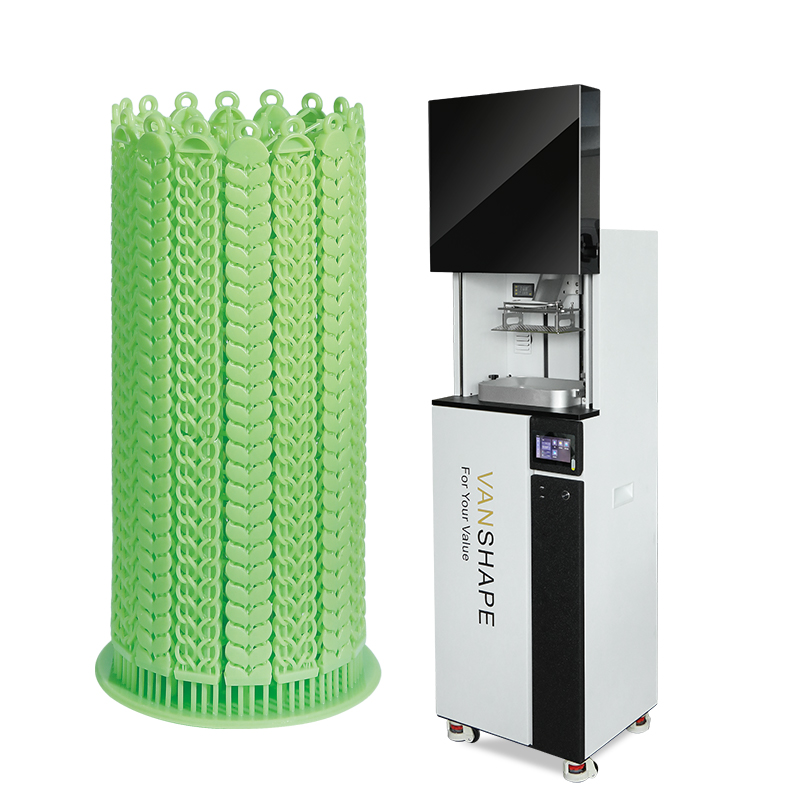
For workshops seeking to integrate 3D printed patterns into their casting workflow, Yihui Casting provides 3d jewelry printer systems compatible with a wide range of castable resins. Contact Yihui Casting to discuss printer specifications, resin compatibility, and equipment recommendations tailored to your casting requirements.
 online service
Scan to wechat :