Custom jewelry manufacturing has historically been constrained by the cost and time required to produce molds for wax injection. Each unique design required a master pattern and a rubber or metal mold before any production wax pattern could be created. For custom one-off pieces, this mold cost was a sunk expense recovered only if the design was subsequently produced in quantity. The adoption of 3D jewelry printing has fundamentally altered this cost structure by enabling direct production of castable patterns from digital files, eliminating the need for physical molds in many custom jewelry applications. This article examines how 3D printing reduces mold making costs, the specific cost components affected, and the practical implications for jewelry workshops that handle custom design work.
To understand the cost savings that 3D printing provides, it is necessary to first examine the cost structure of traditional mold making for custom jewelry. The conventional workflow for producing a custom piece involves several steps, each with associated costs:
The process begins with a master pattern, which is a physical representation of the final design. Master patterns are produced by hand carving, CNC machining, or 3D printing. Hand carving requires 4 to 20 hours of skilled labor depending on complexity, at costs ranging from $100 to $500 or more per piece. CNC machining requires CAD programming, machine setup, and finishing, with costs typically between $50 and $300 per master. If a 3d jewelry printer is used to produce the master, the cost is $2 to $8 in material plus 1 to 3 hours of labor.
Once the master pattern exists, a rubber mold is created. The master is embedded in unvulcanized rubber, which is then compressed and heated in a vulcanizing press for 30 to 90 minutes. After cooling, the rubber is cut open along parting lines to reveal the mold cavity. Mold cutting is a skilled operation requiring 1 to 3 hours of an experienced mold maker's time. The total cost of a rubber mold, including materials and labor, typically ranges from $50 to $200 per design.
For designs requiring metal molds—used when high precision is needed or when the design will be produced in large quantities—CNC machining of aluminum or brass is required. Metal mold costs range from $300 to $1,500 or more, depending on complexity, size, and the number of cavities.
For a custom one-off piece, the mold is used to produce a single wax pattern and then stored. The entire mold cost is allocated to that single piece, adding $50 to $200 or more to the production cost. This makes traditional mold-based production economically challenging for custom jewelry, where each design is unique and may never be reproduced.
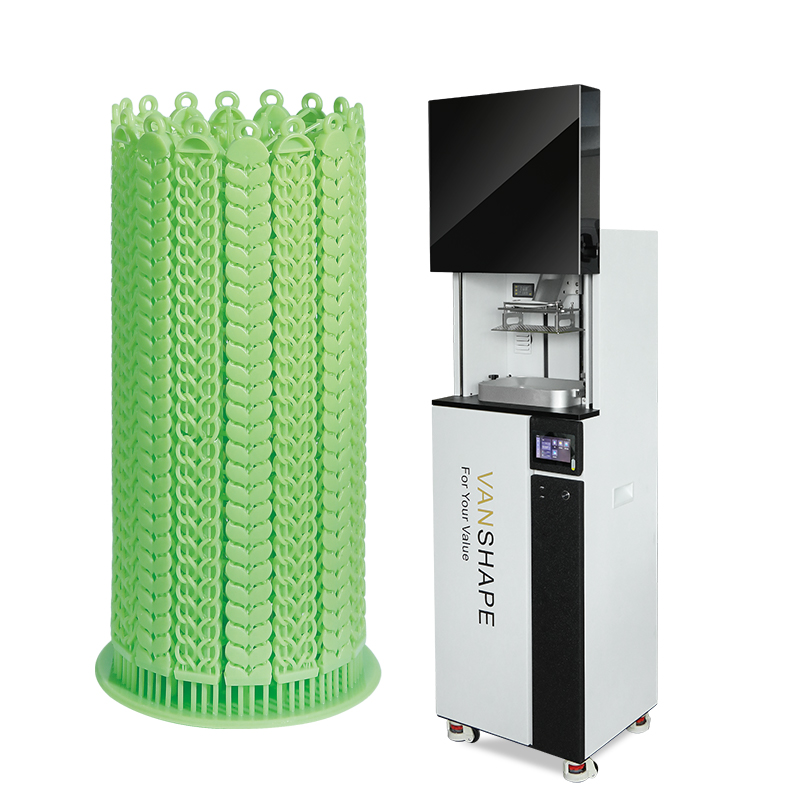
3D jewelry printing eliminates the mold-making step entirely for designs that are produced in small quantities. Instead of creating a master pattern, making a mold, and injecting wax, the workshop prints a castable pattern directly from the CAD file. The pattern is then invested and cast using the standard lost wax process, with no mold involved at any stage.
The cost savings are straightforward to calculate. For a custom ring design that would require a $150 rubber mold in the traditional workflow, 3D printing eliminates that $150 entirely. The only costs are the print material ($2 to $8) and post-processing labor (5 to 15 minutes at typical rates). Even accounting for machine depreciation and consumables, the total per-pattern cost rarely exceeds $10 to $15. Compared to the $150 mold cost plus $0.75 per injected pattern, the savings on a single custom piece are approximately $135 to $145.
For a workshop producing 50 custom pieces per month, each requiring a unique mold, the monthly mold cost savings can reach $7,500 or more. Over a year, this amounts to $90,000 or more in eliminated mold costs—a figure that often exceeds the cost of purchasing and operating a professional 3D jewelry printer.
The cost savings extend beyond direct mold expenses. Eliminating the mold-making step also eliminates the associated labor, equipment usage, and material waste. Vulcanizing presses, rubber molding compounds, and mold-cutting tools are consumed only when molds are made. By reducing mold production, workshops can reduce their consumption of these materials and the labor hours required for mold-making operations.
Custom jewelry design is an iterative process. Clients request changes, proportions are adjusted, and details are refined through multiple revision cycles. In the traditional workflow, each design change that affects the mold geometry requires producing a new master and creating a new rubber mold. A design that goes through four iterations incurs four mold costs—$600 to $800 in mold expenses alone for a typical custom ring.
3D printing removes this iteration penalty entirely. Each design revision is simply a modified CAD file printed as a new pattern. The cost per iteration is limited to material and machine time—typically $5 to $15 per pattern. Four iterations of a design cost $20 to $60 in printing, compared to $600 to $800 in mold-making. This dramatic reduction in iteration cost allows workshops to offer more design revisions to clients without eroding profit margins.
The ability to iterate inexpensively also improves design quality. Designers can test multiple variations of a concept—different prong configurations, stone sizes, or shank profiles—and evaluate them physically before committing to a final design. In the traditional workflow, the cost of producing multiple mold variations makes this approach impractical for all but the highest-budget commissions.
While 3D printing eliminates mold costs for custom and small-batch work, traditional mold making remains economically viable for production runs where the mold cost can be amortized across many pieces. The decision point depends on the per-pattern cost difference between printing and injection:
Single custom piece: 3D printing is always more economical. Mold cost cannot be amortized, making it a pure sunk expense.
5 to 20 pieces: 3D printing remains more economical for most designs. The mold cost per piece is still high relative to the printing cost per piece.
30 to 50 pieces: The crossover point where injection becomes more cost-effective. At this volume, the mold cost is sufficiently amortized to offset the higher per-pattern cost of 3D printing.
100+ pieces: Injection from a mold is significantly more economical. Per-pattern injection cost is typically $0.30 to $1.50, compared to $5 to $15 for printing.
Workshops that handle both custom and production work need both capabilities. The mold making equipment for jewelry remains an essential part of the workshop for production designs, while the 3D printer handles custom work and small batches. The key operational change is that molds are made only when production volume justifies the cost, rather than for every design that enters the workshop.
The reduction of mold making costs through 3D printing generates several secondary cost benefits that extend beyond the direct savings on mold materials and labor:
Traditional mold-based production requires physical storage for molds. A workshop producing 200 custom designs per year accumulates 200 molds that must be cataloged, stored, and maintained. Mold storage requires physical space, organizational systems, and labor for retrieval when reorders occur. By eliminating molds for custom designs, 3D printing reduces the storage footprint and the associated overhead costs. Digital files are stored electronically and can be retrieved instantly for reprinting.
Eliminating mold-making from the custom jewelry workflow reduces lead times by 1 to 3 days per piece. For workshops competing on turnaround time, this speed advantage can be a differentiator in the market. Clients who might wait 2 to 3 weeks for a custom piece in the traditional workflow can receive their order in 1 week or less when 3D printing is used for pattern production.
Traditional mold-based production requires a minimum order quantity to justify the mold cost. A workshop might require a minimum of 10 pieces per custom design to amortize the $150 mold cost across the run. With 3D printing, the minimum order quantity drops to 1, because there is no mold cost to amortize. This allows workshops to accept custom orders that would be uneconomical in the traditional workflow.
Mold-making imposes geometric constraints on designs. Undercuts, internal cavities, and complex geometries require multi-part molds or inserts that increase cost and complexity. Some designs cannot be molded at all. 3D printing removes these constraints, allowing designers to create geometries that would be impractical or impossible to produce with mold making equipment for jewelry. This design freedom can be a competitive advantage, allowing the workshop to offer unique designs that competitors using traditional methods cannot produce.
Transitioning from mold-based pattern production to 3D printing requires investment in equipment, software, and training. The essential components include:
3D jewelry printer: A DLP or SLA printer capable of 25 to 50 micron resolution, with a build volume sufficient for the largest pieces the workshop produces. Professional-grade jewelry printers range from $3,000 to $25,000.
CAD software: Jewelry-specific CAD software such as Rhino with JewelCraft, Matrix, or 3Design. Software costs range from $1,000 to $8,000 depending on the package and licensing model.
Post-processing equipment: UV curing chamber, washing station with isopropyl alcohol, and basic hand tools for support removal and surface finishing. Total cost: $300 to $1,000.
Castable resin supply: Initial inventory of castable resin at $150 to $400 per liter, with ongoing consumption based on production volume.
Staff training: CAD modeling training for designers and printer operation training for production staff. Training costs vary but typically range from $500 to $2,000 for initial setup.
The total initial investment for a complete 3D printing setup ranges from approximately $5,000 to $30,000, depending on equipment quality and software selection. For a workshop producing 50 custom pieces per month with average mold savings of $150 per piece, the payback period on a $15,000 investment is approximately 2 months. Even at lower production volumes, the payback period is typically under 12 months.
3D jewelry printing provides a direct and measurable reduction in mold making costs for custom jewelry designs. By eliminating the need for physical molds on custom and small-batch work, workshops can save $50 to $200 per design in mold costs, reduce lead times by 1 to 3 days, lower minimum order quantities, and offer greater design freedom. The technology does not replace mold-based injection for production runs, where the ability to amortize mold costs across many pieces makes injection more economical. Instead, it complements traditional mold making by handling the work that molds are least suited for—unique designs, iterative prototyping, and small-batch custom production. For workshops seeking to reduce costs and expand their custom jewelry capabilities, investing in 3D printing equipment offers a clear and rapid return on investment.
To learn more about equipment for your custom jewelry production, Yihui Casting provides a full range of 3d jewelry printer systems and mold making equipment for jewelry to support both custom and production manufacturing workflows.
 online service
Scan to wechat :