Jewelry casting involves molten metal at temperatures exceeding 1,000 degrees Celsius, high-voltage electrical systems, vacuum and pressure vessels, and potentially hazardous process emissions. Selecting jewelry casting equipment without a thorough safety evaluation exposes operators to burn injuries, electrical hazards, respiratory risks, and equipment failure scenarios that can damage facilities. This article identifies the safety features that should be non-negotiable when purchasing precious metal casting equipment for any professional workshop.
The emergency stop system is the most fundamental safety feature on any precious metal casting equipment, yet the implementation quality varies significantly between manufacturers. A properly designed emergency stop circuit must instantly cut power to all hazardous energy sources: the induction heating system, vacuum pump, pressure system, and any motorized flask handling mechanisms.
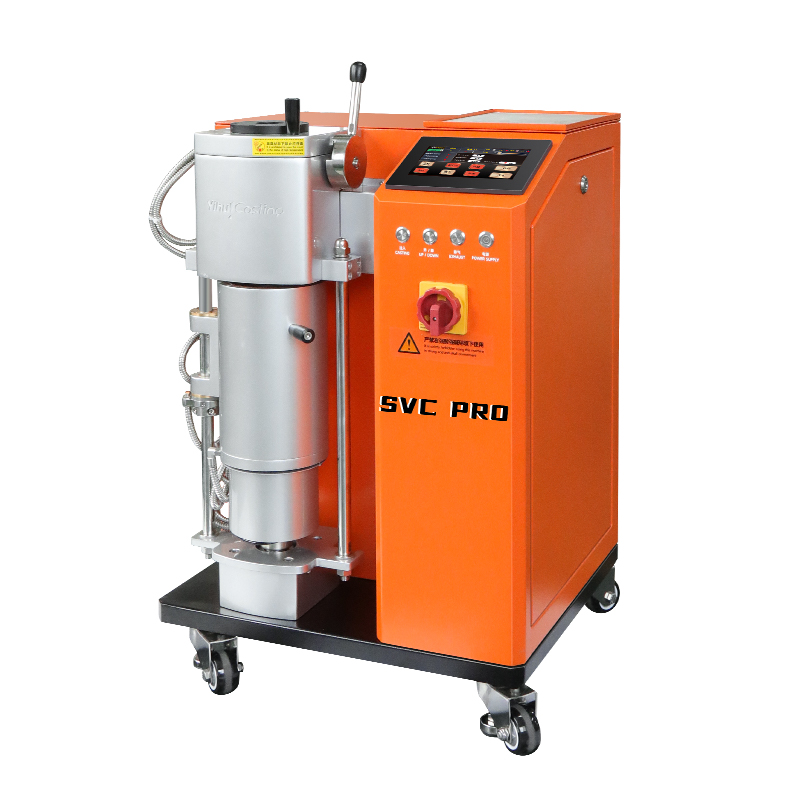
Look for emergency stop buttons that meet IEC 60947-5-1 or equivalent standards, positioned at the operator station and at a secondary location away from the casting area. The button should be the mushroom-head, push-to-stop, twist-to-release type with red actuator on yellow background, conforming to ISO 13850. When activated, the system should fail to a safe state, meaning the vacuum chamber should vent to atmosphere and the heating power should be disconnected. A machine that maintains power to heating elements or keeps vacuum applied after an emergency stop is not compliant with current safety standards.
Beyond the emergency stop, the main power isolation should be a lockable disconnect switch that allows maintenance personnel to apply a personal lockout device during servicing. This prevents accidental energization while someone is working inside the machine cabinet or replacing components. The disconnect should be clearly labeled and physically accessible without reaching over hot surfaces or moving parts.
The casting process in a vacuum pressure casting machine generates several types of emissions that require engineered controls. Investment burnout produces combustion byproducts that must be vented. The vacuum pump exhaust may contain oil mist and trace metal fumes. Fluxes and de-oxidizers used during melting release compounds that can irritate the respiratory system. A comprehensive gas protection strategy integrates machine-level features with facility-level ventilation.
At the machine level, look for a vacuum pump exhaust that can be ducted to an external ventilation system. Many professional machines include a port specifically for connecting the pump exhaust to a fume extraction duct. The machine cabinet should be internally ventilated with a fan that maintains negative pressure relative to the room, preventing fugitive emissions from escaping into the workspace.
For precious metal casting equipment used with platinum group metals, consider systems equipped with inert gas purging capability. Argon or nitrogen purging of the melt chamber before heating begins not only improves casting quality by reducing oxidation, but also displaces oxygen that could support combustion of organic residues in the investment. The purge system should include a flow meter and an interlock that prevents heating until a sufficient purge volume has been delivered.
Carbon monoxide monitoring is a recommended facility-level complement to machine safety features. Incomplete combustion during burnout can generate CO that may accumulate in enclosed workshop areas. A fixed CO detector with an audible alarm, positioned near the kiln and casting area, provides an additional layer of operator protection.
The most immediate hazard in jewelry casting is contact with hot surfaces, molten metal splatter, or hot investment flasks. Machine design should minimize the probability of accidental contact through a combination of physical guarding, thermal insulation, and procedural interlocks.
The casting chamber door or cover should be interlocked so that the machine cannot cycle with the door open. A high-quality interlock uses a positively driven safety switch that directly breaks the power circuit when the door is opened, rather than relying on software-based detection that could fail in an unsafe state. Some professional systems include a door presence sensor that prevents cycle initiation if the door position cannot be confirmed.
Hot surfaces that cannot be fully enclosed, such as the flask holder area after casting, should be clearly marked with high-temperature warning labels specifying the expected temperature range. Better designs incorporate a refractory thermal shield between the flask holder and the operator position. The flask handling area should include a designated cooling rack with adequate clearance from walkways and combustible materials.
For crucible handling, the machine should be designed so that the crucible can be accessed for cleaning or replacement without the operator reaching over or around hot surfaces. Crucible tongs and heat-resistant gloves rated for the operating temperature must be provided with the equipment and stored in a clearly designated location adjacent to the machine.
The induction heating power supply in modern jewelry casting equipment operates at voltages and currents that present serious electrical hazards. Professional equipment incorporates multiple layers of electrical protection, beginning with proper grounding and bonding of all exposed conductive surfaces.
The equipment should carry CE marking or equivalent third-party certification demonstrating compliance with applicable electrical safety standards. The electrical enclosure should provide at least IP54 protection against dust and water spray, given the investment dust environment typical of jewelry casting facilities. Cable entries must be properly glanded to maintain the enclosure's protection rating.
Induction power supplies should include ground fault protection that detects leakage current to ground and interrupts power before fault currents reach hazardous levels. Residual current devices rated at 30 mA provide personnel protection, while 300 mA devices protect against fire risk from insulation failure. Overcurrent protection for individual circuits should be coordinated so that a fault in one subsystem does not disable the entire machine.
The water cooling circuit for induction coils presents a specific electrical hazard because coolant lines bridge the electrical isolation between the high-voltage coil and the grounded chassis. Look for systems with coolant conductivity monitoring that detects increased ionic content in the coolant, which can create a conductive path between coil and ground. Low coolant flow interlocks that disable the power supply when flow drops below a safe threshold protect the coil from overheating and the operator from the consequences of a coil failure under power.
The vacuum and pressure chamber of a vacuum pressure casting machine is a pressure vessel subject to cyclic loading. While not typically classified as a regulated pressure vessel under most jurisdictions due to the moderate absolute pressures involved, the chamber still requires safety features to prevent hazardous pressure buildup or vacuum-related implosion risk.
A pressure relief valve or burst disc should be installed on the pressure side of the system, set to open at a pressure below the chamber's maximum rated working pressure. This prevents over-pressurization that could cause the chamber door to be ejected or the chamber itself to rupture. The relief device should discharge in a direction away from the operator position.
The chamber door or lid should incorporate a safety interlock that prevents opening while the chamber is under vacuum or pressure. A simple mechanical indicator that shows green when the chamber is at atmospheric pressure provides a visual confirmation for the operator before attempting to open the door. This is particularly important after a casting cycle when the chamber may be hot and the door seal may stick.
Vacuum pump oil systems should include a mist separator on the exhaust to capture oil droplets that would otherwise be dispersed into the workspace air. Regular oil changes and filter replacements are essential for maintaining this protection, so the oil drain and fill points should be accessible without removing panels or reaching into confined spaces.
Safety features are only effective when operators understand their function and limitations. The equipment supplier should provide comprehensive operator and maintenance manuals that include: start-up and shutdown procedures, emergency stop locations and function, lockout and tagout procedures for maintenance, personal protective equipment requirements, and hazard identification for each operating phase.
Training documentation should specify the required PPE for casting operations. At minimum, this includes heat-resistant gloves rated for the operating temperature, a face shield or safety glasses with side protection, a heat-resistant apron or jacket, and closed-toe leather footwear. For facilities casting platinum, respiratory protection may be warranted depending on ventilation effectiveness and exposure monitoring results.
The manual should also include a preventive maintenance schedule that addresses safety-critical items: vacuum pump oil change interval, seal inspection and replacement, electrical connection tightness checks, coolant system inspection, and pressure relief device verification. Neglecting these maintenance items directly compromises the safety systems described above.
Safety features in precious metal casting equipment are not optional additions or premium upgrades. They are fundamental design requirements that protect operators, facilities, and the business continuity of the jewelry production operation. When evaluating equipment, request documentation of electrical safety certifications, pressure vessel testing records where applicable, and a demonstration of all safety interlocks before making a purchase decision.
Yihui Casting designs all casting equipment with integrated safety systems meeting international standards. Our machines include redundant interlocks, CE-certified electrical systems, and comprehensive operator protection features. Contact our team to discuss the safety specifications of any equipment in our product line and to arrange a demonstration with your safety requirements in focus.
 online service
Scan to wechat :