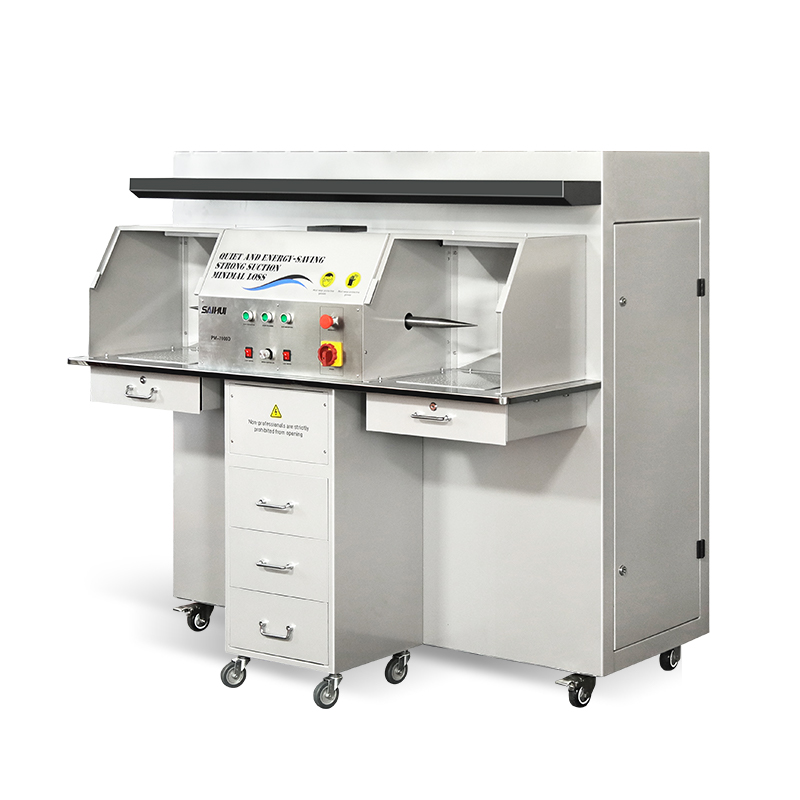
Selecting the right jewelry casting equipment is one of the most consequential decisions a jewelry workshop owner or production manager will make. The casting stage determines the structural integrity, surface quality, and dimensional accuracy of every piece that leaves your facility. A machine that fails to meet your operational requirements will produce flawed castings, waste precious metal, and create production bottlenecks that undermine profitability.
This article examines the technical specifications that deserve the closest scrutiny when evaluating precious metal casting equipment. Rather than a generic checklist, the focus here is on understanding how each specification translates into real-world casting performance for gold, silver, platinum, and palladium alloys.
Melting capacity is most commonly specified in kilograms of gold, but the practical capacity of your jewelry melting furnace or integrated casting machine must account for the density differences between metals. A machine rated for 3 kg of gold will handle approximately 1.5 kg of silver in the same crucible volume. Platinum, with its melting point exceeding 1,768 degrees Celsius, requires equipment rated for substantially higher temperatures than gold or silver casting.
Temperature control precision should be evaluated at two critical points. First, the maximum rated temperature must comfortably exceed the liquidus temperature of your highest-melting alloy, ideally by 100 to 150 degrees Celsius to ensure complete fluidity. Second, temperature stability during the pour cycle must be maintained within a narrow band, typically plus or minus 5 degrees Celsius. Equipment that drifts more than this during the casting cycle introduces porosity and incomplete fill defects.
The heating method also matters. Induction melting provides faster heat-up, more uniform temperature distribution, and electromagnetic stirring that promotes alloy homogeneity. Resistance-heated crucibles offer simpler maintenance and lower upfront cost but generally achieve slower cycle times and less precise temperature uniformity. For workshops casting high-value platinum group metals, induction heating with precise power regulation is strongly recommended to prevent localized overheating that can alter alloy composition.
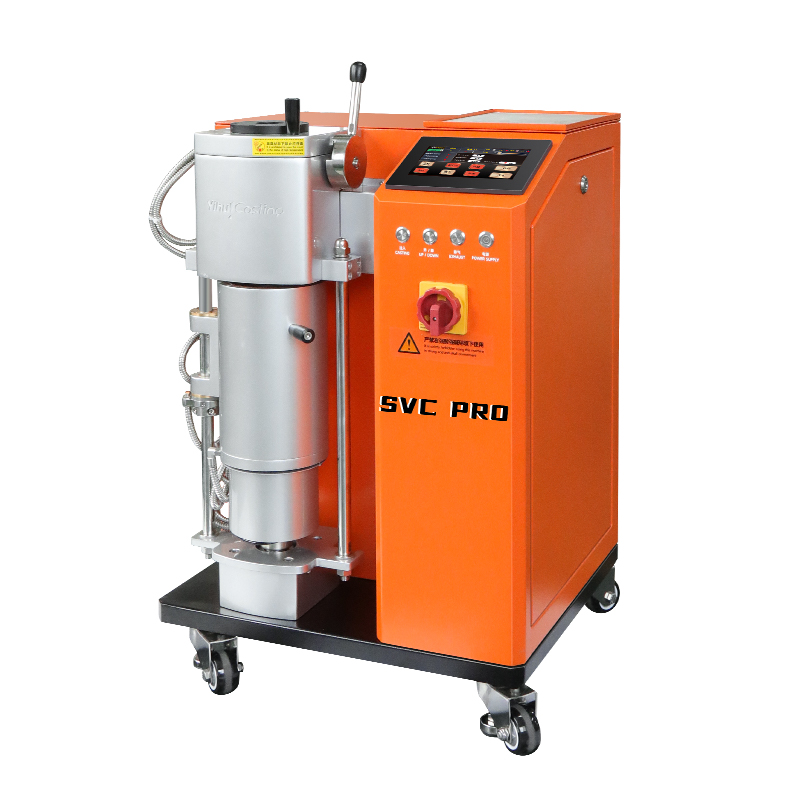
For vacuum pressure casting machine systems, the vacuum level achievable in the casting chamber directly correlates with porosity reduction. A minimum of negative 0.098 MPa (approximately 740 mmHg) is standard for professional-grade equipment. Machines that achieve deeper vacuum levels, approaching negative 0.1 MPa, provide a wider safety margin for complex geometries with thin sections.
Equally important is the vacuum pump's pumping speed, measured in liters per second or cubic meters per hour. A pump that requires 30 seconds or more to reach casting vacuum increases cycle time and exposes molten metal to oxygen for longer than ideal. Professional systems typically achieve casting vacuum in 10 to 15 seconds. The pump should be oil-sealed rotary vane type for reliability; venturi-type vacuum generators generally lack the ultimate vacuum depth needed for consistent jewelry casting results.
On the pressure side, look for systems that apply positive pressure of 0.4 to 0.7 MPa immediately after vacuum draw. This pressure differential is what forces molten metal into the finest details of the investment mold. Machines with adjustable pressure ramp profiles allow operators to tune the pressure curve for different article types, from heavy bangles to delicate filigree pendants.
Flask size determines the physical dimensions of the patterns you can cast in a single cycle. Standard jewelry flask diameters range from 3 to 5 inches, with heights from 4 to 12 inches. A machine that accepts only a single flask size limits your production flexibility. Professional equipment should accommodate at least three flask sizes through interchangeable adapters or an adjustable flask carriage.
Beyond basic fit, evaluate the flask centering and clamping mechanism. The flask must be positioned precisely concentric with the crucible pour spout to ensure metal enters the sprue button cleanly. In vacuum-assisted casting, the flask seal must be airtight because any leakage during the vacuum phase introduces gas porosity at the casting surface. Quick-change flask holders reduce changeover time between production runs and are a worthwhile feature for workshops producing multiple article types daily.
The flask carriage should handle the full weight of a filled investment flask, which for typical 5-inch by 9-inch flasks loaded with investment and wax exceeds 8 kg. Robust mechanical clamping, rather than spring-loaded mechanisms, provides more consistent sealing force over thousands of cycles.
The control system is where entry-level and professional precious metal casting equipment diverge most significantly. A basic temperature controller with manual vacuum and pressure valves can produce acceptable castings, but the operator becomes the limiting factor for consistency. Programmable logic controller (PLC) systems with touchscreen interfaces allow recipe storage, automated cycle sequencing, and data logging for quality traceability.
Key control parameters that should be programmable include: heating ramp rate, hold temperature and duration, vacuum level target, vacuum hold time, pressure level target, pressure hold time, and cooling sequence. The ability to store 30 to 50 casting recipes reduces setup time and eliminates operator-dependent variability between shifts.
Temperature feedback should come from a thermocouple in direct contact with the melt or crucible, not an inferred reading from the induction coil. Type S or Type B thermocouples are standard for the temperature ranges involved in precious metal casting. Dual redundant thermocouples provide an important safety interlock that prevents the controller from overheating the charge if one sensor fails.
The casting environment is demanding. Equipment internals face thermal cycling from ambient to over 1,100 degrees Celsius, exposure to investment dust, and occasional metal splatter. Chamber construction in 304 or 316 stainless steel resists corrosion from flux residues better than painted carbon steel. Critical sliding surfaces should use hardened steel or ceramic guides.
The crucible material and design affect both metal quality and equipment longevity. Graphite crucibles offer good thermal conductivity and are cost-effective for gold and silver alloys but wear faster when used with reactive metals. Ceramic crucibles made from alumina or zirconia provide better chemical resistance and longer service life at a higher purchase cost. The crucible support mechanism should allow tool-free replacement in under two minutes.
Seals and gaskets in the vacuum and pressure system are wear items that should be field-replaceable. Viton or silicone seals rated for the operating temperature range outperform standard nitrile rubber. Availability of seal kits and crucibles from the equipment supplier is a practical consideration that affects total operating cost over a three-to-five-year period.
Power consumption varies significantly between precious metal casting equipment types. An induction-based vacuum pressure casting machine rated for 3 kg gold capacity typically requires a three-phase 380V 50Hz supply drawing 12 to 18 kW during the melting phase. Single-phase alternatives exist for smaller capacities up to 1 kg but operate at lower efficiency.
Compare the nameplate power rating against the actual duty cycle. A 15 kW machine might only draw peak power for the 3 to 5 minute melting phase, averaging 4 to 6 kWh per casting cycle. Water cooling requirements should also be factored in. Many induction systems require a closed-loop chiller supplying 2 to 3 liters per minute at 20 to 25 degrees Celsius water temperature.
Compressed air for pneumatic valves and clamping systems should be clean and dry. A dedicated air dryer and 5-micron filter upstream of the machine protect internal components from moisture and particulate damage that otherwise accumulates over time.
The purchasing decision for precious metal casting equipment ultimately rests on matching technical specifications to your specific production requirements. A workshop producing 50 pieces per day in silver can operate effectively with simpler equipment than a facility casting 500 platinum pieces daily with tight dimensional tolerances. Before committing to any machine, define your current and projected production volume, the range of metals and alloys you cast, your typical flask dimensions, and your quality requirements for surface finish and dimensional accuracy.
Request casting samples from equipment suppliers using your own flask specifications and alloy compositions. A demonstration with your materials reveals more about machine capability than any specification sheet. Yihui Casting offers a comprehensive range of casting solutions with detailed technical documentation to support your evaluation process. Contact our engineering team with your specific requirements to receive a tailored equipment recommendation.
 online service
Scan to wechat :