Lost-wax casting is a metal casting process used to create objects ranging from simple to highly complex shapes in a variety of metals, such as gold, silver, brass, and bronze, by casting from an original model or pattern.
As one of the oldest known metal-forming techniques, lost-wax casting dates back more than 6,000 years and remains widely used today in jewelry making, dentistry, and art. Its industrial counterpart, investment casting, is also a common method for producing precision metal components in engineering and manufacturing.
Although traditionally associated with artisanal craftsmanship, the lost-wax casting process can now be enhanced through digital design and 3D printing. These technologies help simplify the workflow, save time, reduce costs, and adapt the process to modern production needs.
Read on to explore how digital technologies are revitalizing lost-wax casting and what this means for professionals ranging from jewelers and dentists to large-scale manufacturers.
The lost-wax casting process may vary depending on the industry and specific application, but it generally includes the following steps. Cast parts can be produced directly from a wax model, known as the direct method, or from replicas of the original wax model, known as the indirect method. In the direct method, the process moves from step one directly to step four.
Model making:
The artist carves the design in wax. The size and complexity of the wax model depend on the wax carver’s skill and the capacity of the casting equipment.
Creating a mold:
The caster produces a casting from this model and polishes it to create a “master” pattern. This master model is then used to make a rubber mold, which is heated and vulcanized around the master casting to form a flexible mold for wax reproduction.
Producing wax patterns:
Molten wax is injected into, or in some cases poured into, the rubber mold. This process can be repeated multiple times to create identical copies of the original design.
Assembling the wax pattern:
Sprues are attached to the wax copies, which are then connected into a tree-like structure. This structure creates channels that allow the molten wax to drain out and the molten metal to later flow into the mold cavity.
Applying investment materials:
The wax tree is either dipped into a silica slurry or placed into a flask and surrounded by liquid investment plaster.
Burnout:
Once the investment material has dried, the flask is placed upside down in a kiln. The wax melts away, leaving behind a negative cavity in the shape of the original model.
Pouring:
The investment mold is further heated in the kiln to reduce the temperature difference between the mold and the molten metal. The metal is then melted and poured into the cavity, using either gravity or vacuum pressure to ensure complete filling.
Devesting:
After the molten metal has partially cooled, the investment mold is quenched in water to dissolve the refractory plaster and release the rough casting. The sprues are then removed and recycled, and the cast parts are cleaned to eliminate marks left by the casting process.
Finishing:
The cast parts are filed, ground, machined, or sandblasted to achieve the required final geometry and surface finish. When necessary, they are also heat-treated to improve the mechanical properties of the material.
It is no exaggeration to say that lost-wax casting is nearly as old as civilization itself. Artifacts produced using this method—including scepters, sculptures, and furniture—have been discovered in regions as diverse as Israel, Vietnam, Nigeria, Nicaragua, and the Indus Valley. The oldest known lost-wax-cast object, an amulet made by an Indus Valley civilization, is more than 6,000 years old.
After centuries of use for sculptural ornaments and textile relief work, lost-wax casting began to be replaced by piece molding in 18th-century Europe. In the 19th century, parts of the process were adapted into investment casting to meet the demands of growing industrial production.
In dentistry, lost-wax techniques are still widely used to produce gold crowns, inlays, and onlays. As a result, the legacy of lost-wax casting remains clearly visible today.
Today, digital design software and 3D printing are enhancing lost-wax casting by bringing the benefits of a modern digital design and manufacturing workflow to this traditional process.
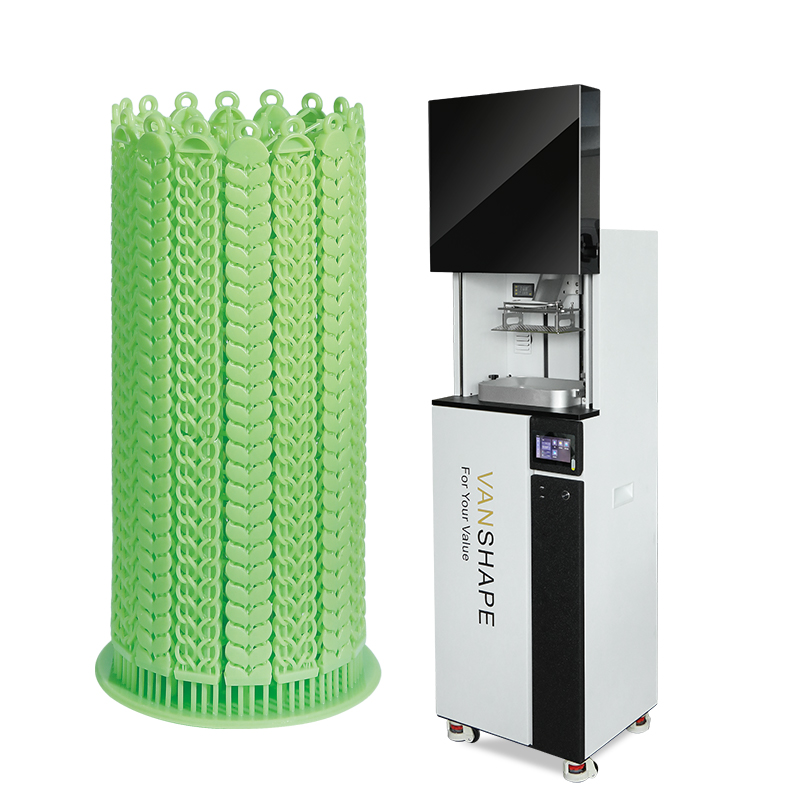
In a digital workflow, designers use CAD software to create models digitally, and professional 3D printers produce printed patterns that can then be used for casting. After the burnout of the positive pattern, the remaining steps follow the same path as in traditional investment casting.
By adopting digital technologies, manufacturers can significantly reduce time-intensive manual work while making designs easier to store, modify, and reproduce whenever needed.
From engineers to jewelry makers, professionals across a wide range of industries are taking advantage of the new possibilities that digital technologies bring to lost-wax casting.
Jewelry and fine ornament production was one of the earliest applications of lost-wax casting. However, creating wax patterns for intricate jewelry by hand is a complex and time-consuming task. In a market driven by high demand and fast-changing fashion trends, handcrafted production can struggle to keep pace.
Today, digital design tools, advanced materials, and affordable in-house resin 3D printers are transforming how jewelry designers and manufacturers approach concept development, prototyping, and production.
Using jewelry CAD software, designers can create pieces digitally, making it much easier to produce and refine complex geometries that would once have required hours of careful hand carving in wax.
Affordable industrial-quality 3D printers can quickly produce patterns that can be cast in much the same way as traditional wax models. At the same time, 3D printing opens up almost unlimited design freedom. With the help of precisely controlled laser technology, intricate details such as delicate filigree, raised lettering, and fine pavé stone settings can be reproduced with exceptional sharpness.
The main challenges in adopting a digital workflow in jewelry often lie in digital design skills and training. However, newer generations of jewelry designers are increasingly being taught both traditional design fundamentals and modern digital tools such as jewelry CAD software and 3D printing, preparing them for the industry’s continued transition toward digital production.
Lost-wax casting and pressed restorations have been standard techniques in dentistry for decades for producing inlays, onlays, crowns, ceramic-alloy crowns, all-ceramic crowns, partial denture frameworks, and other implant restorations.
Traditionally, wax patterns are formed by hand on a working die of the tooth or on an arch model created from a manual patient impression. These patterns are then attached to a sprue tree and burned out, following the conventional lost-wax casting workflow.
With digital technologies, dentists can capture the patient’s anatomy digitally using an intraoral scanner, while dental labs can scan a physical model or impression with a desktop scanner. The scan data is then imported into CAD software, where the dental technician designs the required restoration. The patterns can subsequently be 3D printed in a wax-like material and then cast or pressed using the traditional workflow.
In dentistry, digital design is often easier to implement because the patient’s anatomy is already captured from the impression or scan. Dental CAD software simplifies the restoration design process, while 3D printing automates the production of patterns that would otherwise require extensive manual work and a highly experienced technician.
By combining digital technologies with lost-wax casting, dental labs can benefit from the strengths of both traditional and digital workflows, enabling them to produce highly accurate patterns with greater consistency, reliability, and efficiency.
For industries that require mass-produced metal parts with a high degree of dimensional accuracy, casting remains a cost-effective and highly capable manufacturing method. It is widely used to produce critical components for aerospace, automotive, and medical applications.
Traditionally, patterns for direct investment casting—the industrial form of lost-wax casting—are either carved by hand or machined when parts do not require large-scale production. With the introduction of 3D printing, however, engineers and foundries can produce patterns directly, enabling shorter lead times and greater geometric freedom beyond the design-for-manufacturability (DFM) limitations of conventional molding processes.
The evolution of lost-wax casting through digital tools demonstrates that modern technology does not have to distance manufacturing from traditional craftsmanship. When applied effectively, these techniques can produce high-quality parts at scale, from bespoke jewelry to mass-produced automotive components. The result is a powerful combination of improved production efficiency, greater design flexibility, and the enduring value of a time-tested casting method.
 online service
Scan to wechat :