In modern manufacturing, especially in precision molding industries such as plastic injection molding, rubber molding, and jewelry casting, vacuum technology plays a critical role in ensuring product quality, consistency, and structural integrity. The injection process is highly sensitive to trapped air, moisture, and volatile gases inside the mold cavity. Without proper air removal, even the most advanced injection systems can produce defective parts with voids, weak points, and surface imperfections. This is where vacuum technology becomes essential. By creating a controlled low-pressure environment inside the mold before and during injection, manufacturers can significantly improve flow behavior, reduce defects, and achieve high-performance finished products.
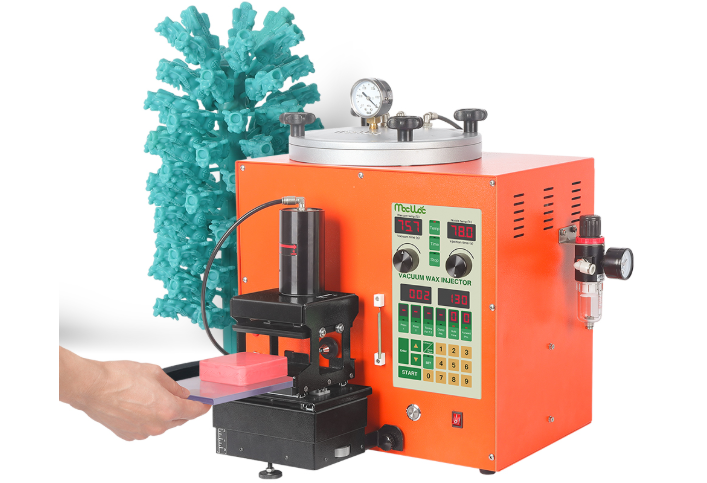
At its core, vacuum in the injection process is used to eliminate air resistance inside the mold cavity. During conventional injection, molten material is forced into a closed mold at high pressure. As the material flows, it displaces air that must escape through vents. However, traditional venting systems are often insufficient, especially for complex geometries, micro-scale structures, or deep cavity molds. Trapped air becomes compressed and can cause burn marks, short shots, incomplete filling, or internal porosity. Vacuum-assisted injection solves this problem by actively removing air before the injection begins, ensuring that the mold cavity is nearly free of gases.
One of the most important benefits of vacuum in injection molding is the drastic reduction of air entrapment defects. When air remains inside the cavity during injection, it becomes compressed and heated by the incoming material. This can lead to localized burning, discoloration, or even carbonization of the final product surface. In high-precision industries such as electronics, automotive components, and medical devices, such defects are unacceptable. Vacuum systems eliminate most of the trapped air, allowing molten material to fill the cavity uniformly and smoothly.
Research in vacuum-assisted molding processes shows that removing cavity air can significantly reduce defect rates and improve dimensional stability in mass production environments.
Another key advantage of using vacuum in injection processes is improved material flow behavior. In a standard injection system, air resistance inside the mold creates back pressure that slows down material flow. This can result in incomplete filling, especially in thin-walled or complex geometries. By reducing internal air pressure, vacuum conditions lower resistance and allow the injected material to flow more freely into every part of the mold.
This improves replication accuracy and ensures that fine details are fully captured. It also reduces the need for excessively high injection pressures, which can otherwise cause flashing or stress within the mold structure.
Vacuum-assisted injection also contributes significantly to improving mechanical strength and structural consistency. When air becomes trapped in a molded part, it creates micro-voids that weaken the internal structure. These voids act as stress concentration points, reducing tensile strength and durability.
In contrast, parts produced under vacuum conditions are denser and more uniform. This is especially important for engineering-grade components that must withstand mechanical loads, thermal cycling, or chemical exposure. Reducing porosity leads directly to improved mechanical performance and reliability in final products.
From a production efficiency perspective, vacuum systems also help manufacturers reduce cycle times and improve yield rates. In traditional injection processes, engineers often need to slow down injection speed to allow trapped air to escape safely through vents. However, slower injection increases production time and reduces output efficiency.
With vacuum assistance, air is removed in advance, allowing faster injection without increasing defect rates. This leads to higher productivity while maintaining product quality. In large-scale manufacturing environments, even small improvements in cycle time can translate into significant cost savings.
Another important aspect of vacuum in injection processes is its impact on mold design flexibility. Without vacuum systems, mold designers must carefully incorporate venting channels, gas escape grooves, and parting line modifications to allow air release. These design constraints can limit product geometry and increase tooling complexity.
Vacuum technology reduces reliance on these mechanical venting solutions, allowing more freedom in mold design. This is particularly valuable for products with intricate internal structures or deep cavities where conventional venting is insufficient.
Vacuum injection processes help reduce post-processing requirements. When air is trapped in molded parts, it often leads to surface defects such as bubbles, pinholes, or rough textures. These defects typically require additional finishing operations such as polishing, trimming, or rework, which increase production cost and time.
By minimizing air entrapment from the beginning, vacuum-assisted injection produces cleaner parts that require less secondary processing, improving overall manufacturing efficiency and product consistency.
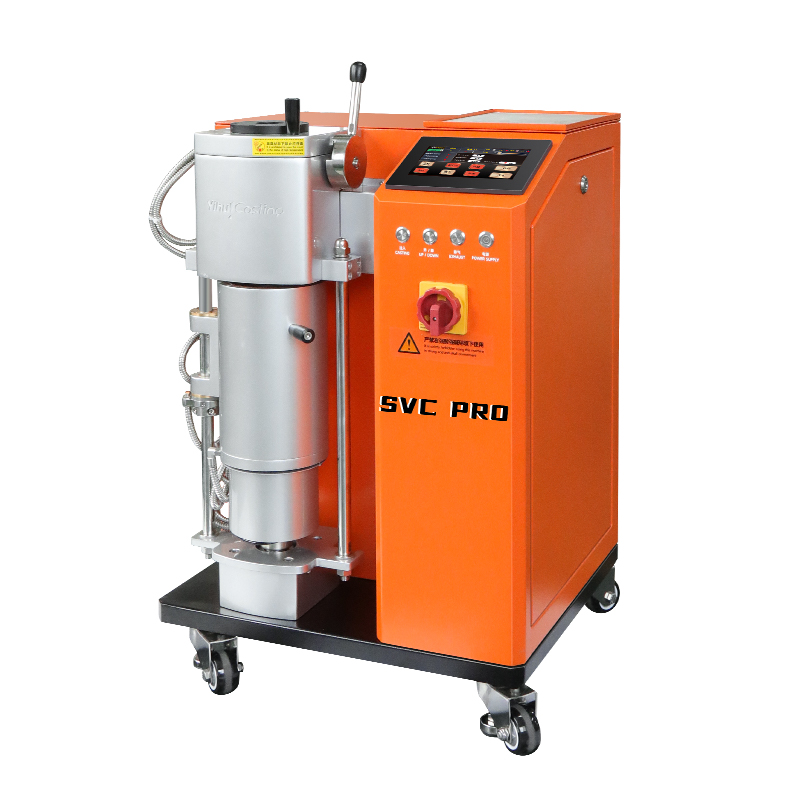
Vacuum technology is widely used in specialized industries such as jewelry casting and precision investment casting, where even microscopic defects can affect final product value. In jewelry production, vacuum is used during wax injection and metal casting stages to ensure that fine details are accurately reproduced without air bubbles in the mold.
A stable vacuum level is considered essential for achieving high-quality casting results without porosity or structural defects, especially in high-value precision components.
Despite its advantages, vacuum in injection processes requires careful system design and maintenance. Achieving a stable vacuum environment depends on mold sealing quality, vacuum pump performance, and proper process timing.
Even small leaks in the mold or injection system can significantly reduce vacuum efficiency, leading to inconsistent results. Therefore, manufacturers must ensure airtight mold construction and regularly maintain vacuum valves and pumping systems to ensure long-term stability.
It is important to understand that vacuum injection is not a replacement for traditional injection molding but rather an enhancement technology. It is most effective in applications where air entrapment is a known challenge or where high precision is required.
As product designs become more advanced and quality requirements increase, vacuum-assisted injection processes are becoming increasingly important in modern manufacturing strategies.
In conclusion, the importance of vacuum in the injection process lies in its ability to fundamentally improve product quality, reduce defects, and enhance manufacturing efficiency. By eliminating trapped air inside the mold cavity, vacuum technology ensures smoother material flow, higher structural integrity, and superior surface finish.
It also enables faster production cycles, greater design flexibility, and reduced post-processing costs. As industries continue to demand higher precision and reliability, vacuum-assisted injection processes will remain a key technology driving innovation in molding and casting applications worldwide.
 online service
Scan to wechat :