Two core techniques have traditionally defined jewelry manufacturing: handcrafting and lost-wax casting. While both methods deliver high-quality results, they demand extensive craftsmanship, are highly time-consuming, and leave little room for error—where even small mistakes can result in costly material and production losses.
Today, however, digital design and 3D printing technologies are reshaping these traditional workflows. By integrating jewelry 3D printing into established production processes, manufacturers are unlocking new levels of precision, efficiency, and design flexibility, along with expanded customization possibilities for end customers.
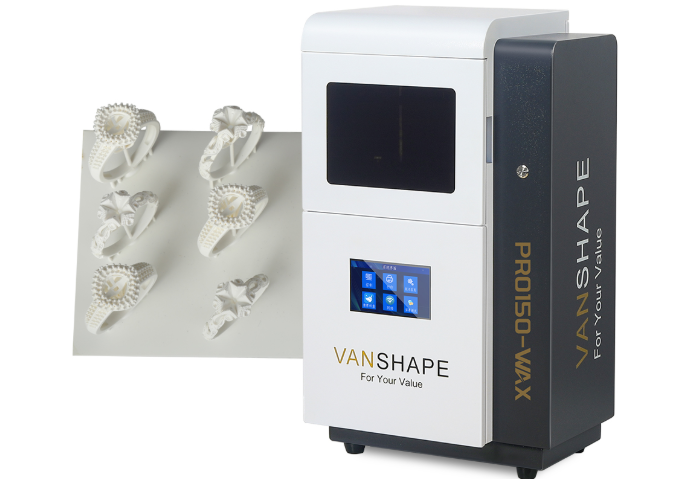
Modern 3D printed jewelry production does not replace investment casting (lost-wax casting), but rather enhances it by combining traditional principles with digital manufacturing advantages.
In conventional lost-wax casting, a jewelry designer manually carves a wax model, which is then encased in a mold material and heated to burn out the wax. Molten precious metals such as gold or silver are subsequently poured into the cavity to form the final piece. After cooling, the casting is removed and undergoes polishing and finishing to achieve its final appearance.
In contrast, a digital workflow begins with CAD (Computer-Aided Design) software, where jewelry models are created with high precision. These designs are then produced using a professional 3D printer to generate highly accurate wax or resin patterns suitable for casting. After post-processing, the printed patterns are assembled and invested into a mold. During the burnout stage, the printed material is eliminated, leaving a clean cavity for metal casting. The remaining steps—casting, recovery, and finishing—follow the same principles as traditional methods.
By adopting this hybrid approach, jewelers significantly reduce manual labor and production time while improving design consistency. Digital files can be easily stored, modified, and reproduced, enabling faster iteration and more scalable jewelry manufacturing without compromising craftsmanship quality.
Until recently, the complexity of jewelry design and production meant that customization was often an expensive, time-intensive service reserved for premium clients. However, with the introduction of digital tools and 3D printing, personalized jewelry has become far more accessible and is now commonly offered as part of standard services or as a value-added option.
Today, when a customer visits a jeweler to request a custom piece—such as an engagement ring—they can collaborate directly with the designer to refine their ideas in real time. In many cases, a physical prototype of the design can be produced within an hour, allowing the customer to view, handle, and try on a tangible model before final production.
This combination of on-site digital design and rapid 3D printing has significantly shortened the traditional feedback loop between designers and customers. The transition from concept to prototype and then to production is now much more efficient, as there is no longer a need for time-consuming manual wax carving for every iteration. Prototypes can be quickly adjusted based on customer feedback, reprinted, and then finalized using the lost-wax casting process. This streamlined workflow significantly reduces the overall cost of producing customized jewelry while improving accuracy and customer satisfaction.
One of the most significant advantages of 3D printing in jewelry manufacturing is the expanded freedom in design complexity. Designers are now able to create intricate geometries that would be extremely difficult, if not impossible, to achieve through traditional hand-carving techniques.
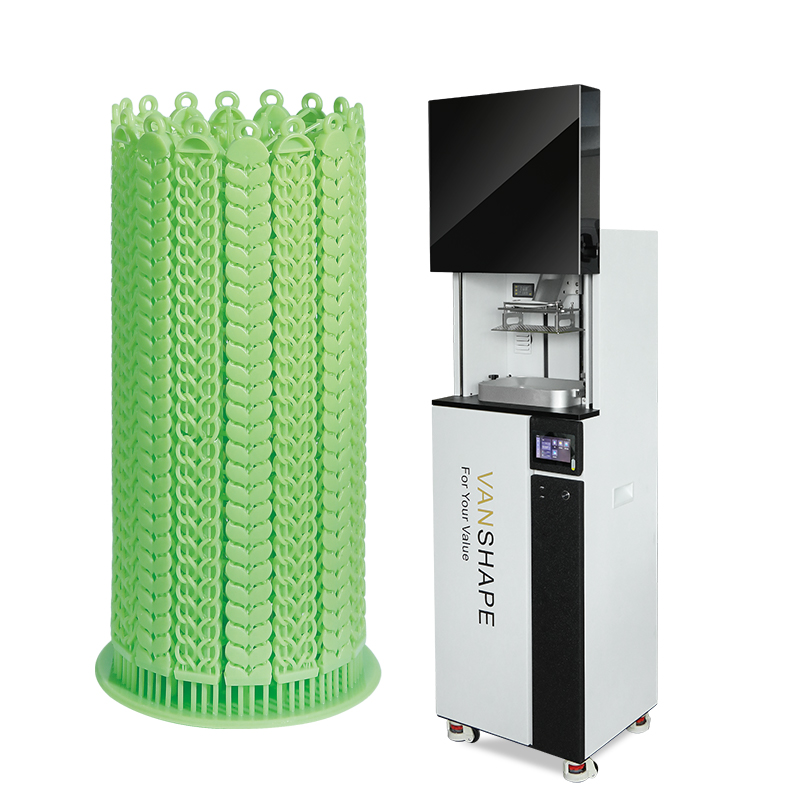
Advancements in castable resin materials have also elevated the quality achievable with affordable desktop stereolithography (SLA) 3D printers. SLA technology produces highly accurate patterns with exceptional surface detail and smooth finishes, making it ideal for investment casting applications.
Among commonly used materials, both True Cast Resin and Castable Wax Resin are widely adopted for producing jewelry patterns. True Cast Resin is a wax-filled material engineered for precision casting of intricate designs up to approximately 5 mm thickness. It is particularly suitable for fine filigree work, raised lettering, and detailed pavé stone settings, delivering consistently reliable casting results.
Castable Wax Resin, on the other hand, offers higher strength and stiffness, enabling the production of ultra-fine and delicate structures. Its excellent green strength ensures superior shape retention, especially for thin geometries such as wire filigree. With approximately 20% wax content and zero ash formulation, it ensures a clean burnout process and high casting purity, making it highly suitable for professional jewelry manufacturing workflows.
| Castable Wax Resin | Castable Wax 40 Resin | True Cast Resin | Clear Cast Resin | Grey Resin | High Temp Resin | |
|---|---|---|---|---|---|---|
| Applications | Fine filigree, lightweight jewelry, and dental applications | Medium to heavy jewelry and small engineering components | Medium to heavy jewelry, medallions, figurines, and small engineering components up to 5 mm thick | Demanding engineering applications over 3 mm thick | Inexpensive custom fittings | Vulcanized rubber molding |
| Compatibility | Form 2 Form 3/+ Form 4 | Form 2 Form 3/+ | Form 4 | Form 2 Form 3/+ Form 4 | Form 2 Form 3/+ Form 4 | Form 2 Form 3/+ Form 4 |
3D printing enables the creation of extremely fine structures and highly intricate geometries with ease. As traditional design constraints are increasingly removed, entirely new design languages are emerging within the jewelry industry. This shift is being driven by jewelers adopting digital capabilities across the United States, South Asia, Asia-Pacific regions, and the Middle East, where innovation in digital jewelry manufacturing is accelerating rapidly.
Beyond customization, digital tools are also transforming how jewelry designs are scaled for mass production.
In traditional workflows, vulcanized rubber molds are commonly used to replicate wax patterns for lost-wax casting. However, the master pattern used to create these molds is typically produced through hand-carved wax models or investment-cast prototypes, both of which are labor-intensive and time-consuming.
With modern 3D printing technologies, particularly SLA (stereolithography), manufacturers can directly produce high-precision master models used for creating both room temperature vulcanization (RTV) molds and high-temperature vulcanized rubber molds.
Thanks to the exceptional surface quality and dimensional accuracy achievable with SLA 3D printing, these printed parts often require minimal post-processing. As a result, manufacturers can bypass traditional master wax carving entirely and move directly from a 3D printed model to mold production. The printed master can be used to create durable rubber molds, which are then employed to replicate wax patterns efficiently for large-scale production.
This streamlined workflow significantly improves production efficiency, reduces manual labor, and ensures consistent quality across batches—making it highly suitable for modern jewelry manufacturing at scale.
Due to the historically high cost of large-scale jewelry 3D printers and the perceived barrier to entry in digital jewelry design, 3D printed jewelry, despite its strong potential, still accounts for only a relatively small share of the overall market.
However, this situation is rapidly changing. As jewelry 3D printers become more affordable, compact, and easier to operate, digital workflows in the jewelry industry are expected to see significant growth. Desktop stereolithography (SLA) 3D printers, in particular, are playing an increasingly important role in this expansion.
The future of 3D printing in jewelry manufacturing is promising. As education and familiarity with digital design methods continue to grow, these workflows are becoming more accessible to a wider range of users. At the same time, ongoing technological advancements—such as more accurate and intuitive 3D printers—are making it easier for jewelers to adopt digital production processes.
Meanwhile, developments in casting materials, including solutions like True Cast Resin, are enabling jewelers to efficiently produce highly detailed patterns with reliable casting performance. Together, improvements in both equipment and materials are accelerating the adoption of digital workflows in modern jewelry manufacturing.

 online service
Scan to wechat :