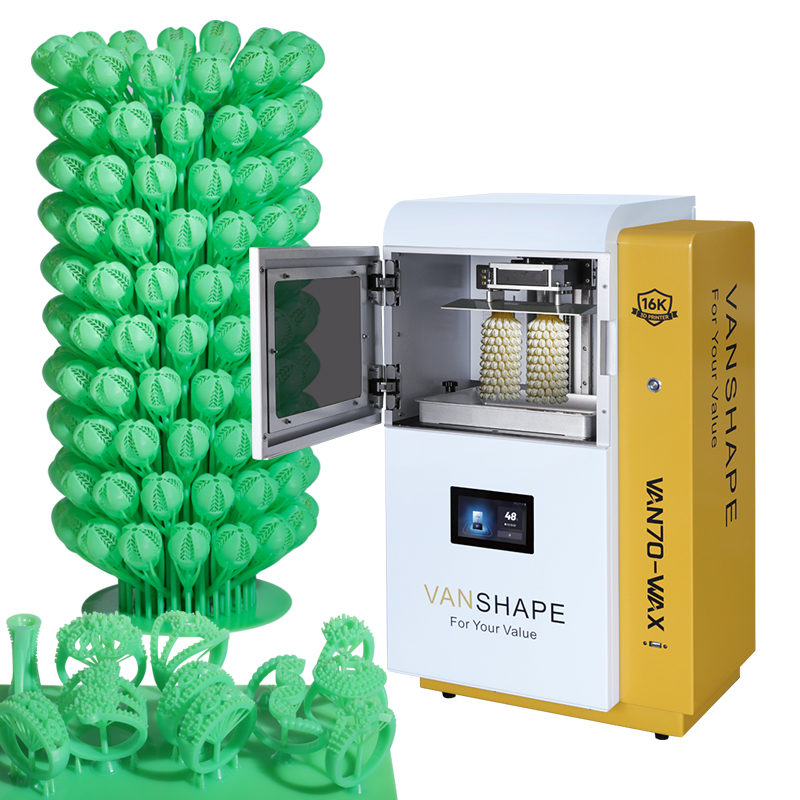
In the field of jewelry manufacturing, lost wax casting technology has become one of the core technologies for high-end jewelry creation due to its ability to accurately restore complex details and adapt to various precious metal materials. As a member of Yihui Casting, mastering the entire process of jewelry wax loss casting is not only the key to improving professional skills, but also the foundation for us to safeguard the "craftsmanship quality" of every jewelry work. Today, let's comprehensively dismantle the complete process of jewelry wax loss casting from the principle of craftsmanship to practical details, and help everyone operate accurately and collaborate efficiently in their positions.
Whole process disassembly
The Eight Steps of Craftsmanship from Wax Mold to Finished Product

The wax loss casting process of jewelry is intricately linked, and the precision of each step directly affects the quality of the final product. Next, we will follow the sequence of "pressing the adhesive film → opening the adhesive film → wax injection (mold) → planting wax trees → filling gypsum and vacuuming → baking gypsum → traditional casting → automatic vacuum pressure casting" to explain in detail the operation points, tool usage, and common problem solutions for each link.
Pressing adhesive film

Mold filling: Wrap the original mold with silicone gel, place it in the mold frame, place mold beads at the water outlet, fill it with silicone gel and flatten it;
Sulfurization treatment: Based on the thickness of the silicone gel (approximately 10mm for 3 layers and 13mm for 7 layers), set the corresponding temperature on the molding machine and cure for 32-42 minutes. Tighten the handle to press the heating plate tightly against the molding frame;
Mold opening cooling: After vulcanization is completed, wear high-temperature gloves to remove the rubber mold, let it cool naturally until it is not hot to the touch, and use a surgical knife to cut open the rubber mold to obtain a replica mold.
Open adhesive film

Positioning the knife: Use four legs to position the rubber mold, cut along the centerline from one side of the water outlet, first open two vertical edges (3-5mm deep), and then cut out the corresponding yin-yang triangular buckle to complete the preliminary positioning;
Progressive cutting: Cut gradually into the mold according to the predetermined tangent line (straight/curved), pull the mold outward while cutting, and gently open and pull when encountering flower threads/wavy patterns;
Separate and take out the mold: When cutting to the ring finger/inlay, cut along the claw axis and the ring head side, confirm that the silver plate has no wire adhesion, cut and take out, and finally cut the bottom (leaving a width of 12mm) to separate the inside.
Wax injection

Equipment preparation: Use a wax injection machine to melt wax beads into a wax cylinder (temperature 72 ℃), and set the wax nozzle temperature to around 75 ℃;
Mold processing: Sprinkle talcum powder on complex details (for easy demolding), and install the mold onto the wax injection machine fixture;
Wax injection operation: Start the equipment by vacuuming the mold, spraying release agent, and then injecting wax. After the wax mold cools and solidifies, it can be removed.
plant wax trees

Operation method: Use a wax welder to layer and sequentially weld the wax mold onto the wax core. The arrangement should be orderly, and gaps should be maintained between the wax molds to prevent contact;
Core objective: Plant as many wax patterns as possible on wax trees to meet the needs of mass production;
Key note: If using a casting machine for production, it is necessary to accurately weigh the weight of each string of wax trees (excluding the base).
Gypsum casting and vacuum pumping

Preparation: Insert the wax tree chassis into the steel cup, wrap it with transparent adhesive paper (2cm above the upper edge of the steel cup), and number it;
Mixing gypsum slurry: Mix 1kg of gypsum powder with 380-400ml of water (25-30 ℃), add water twice and stir, then vacuum for 3-4 minutes;
Gypsum casting and standing: Slowly cast gypsum along the inner wall of the steel cup to 2cm, vacuum continuously for 1 minute, and then let it stand for 1 hour. After solidification, clean the flange edge, remove the adhesive paper and wait for baking.
Traditional Casting


Preparation operation: Place the baked gypsum mold with the water outlet facing upwards into the casting bucket of the suction casting machine;
Negative pressure forming: Connect the vacuum pump to extract air from the casting barrel, creating negative pressure in the gypsum mold cavity, and then pour molten metal into the mold cavity through the water outlet;
Process advantage: The pressure difference between the inside and outside of the mold cavity (internal pressure is lower than external pressure) allows for more thorough filling of the casting, resulting in a smoother surface and higher density.
Automatic vacuum pressure casting

Preliminary preparation: Prepare the metal materials in proportion, and set the parameters such as temperature, injection time, and pressure in the casting machine (reference temperature for different metals, such as gold at about 990 ℃);
Automated operation: Put the raw materials into the melting crucible → close the lid and press the automatic button → wait for the prompt to put them into the gypsum mold → push the casting bucket to the designated position → press the injection button, and the machine will automatically complete the casting;
Follow up processing: After casting is completed, clamp out the steel cup and let it sit for 15-20 minutes before rinsing with water
The future is promising.
Learning knows no bounds, gather strength and set off again

The end of a training session is the beginning of applying what has been learned. This special training not only provided a platform for partners to learn and exchange, but also solidified their professional foundation and improved their core skills, injecting strong impetus into the high-quality development of Yihui Casting. In the future, Yihui Casting will continue to focus on the growth needs of its partners, prepare more high-quality training that is in line with industry trends and business realities, and help every partner deepen their expertise and continuously improve in their professional fields. We look forward to everyone translating the knowledge learned in this training into practical work results, shining brightly in their respective positions, and working hand in hand with the company to create a more brilliant future!
Yihui Casting Technology Co., Ltd. was established in 2003. After more than 20 years of accumulation, Yihui has now developed into a national high-tech enterprise that integrates research and development, production, sales, consulting, installation, and training of lost wax casting equipment, and provides one-stop solutions for metal casting. Yihui Casting Technology products include metal casting equipment, casting wax, graphite products, quartz products, etc., which are exported to Southeast Asia, the Middle East, Europe, America and other regions. The company has its own R&D team, which independently develops and produces automated vacuum die-casting machines, G20 vacuum bead scattering machines, and intelligent system D3 vacuum pressure casting machines, breaking the industry's long-standing dependence on imported high-performance jewelry equipment.
For more information about Yihui Casting Technology Co., Ltd., please visit our official website or contact our team.website: www.yihuicasting.com email : info@yihuicasting.com whatsapp : +86-13802830498

 online service
Scan to wechat :